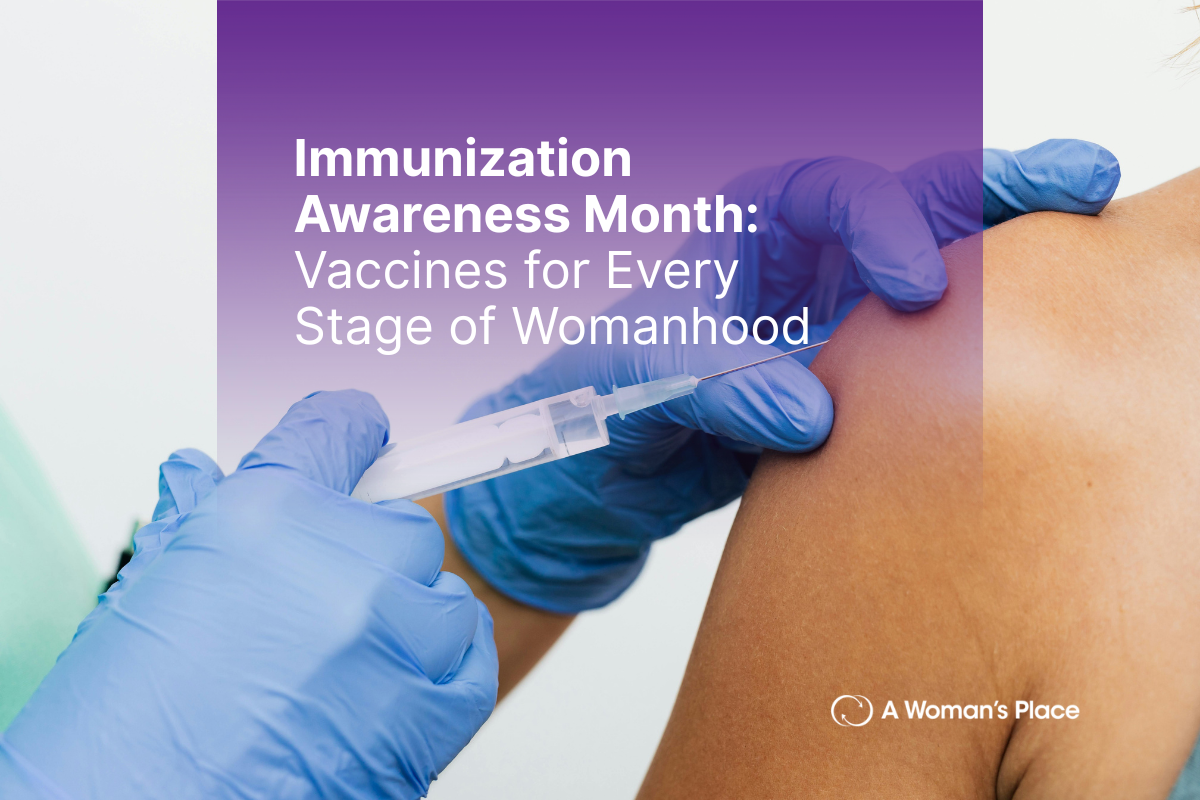
When most people think about vaccines, they think about childhood. The flu shot at the pediatrician. The MMR before kindergarten. What gets talked about much less is the fact that vaccine needs do not stop when you turn 18. Women, in particular, have specific vaccine recommendations that shift across different stages of life, from the teenage years through pregnancy through menopause and beyond.
August is National Immunization Awareness Month, and we want to take this opportunity to walk through what women need to know about vaccines at each stage, so you can have an informed conversation with your provider at your next visit.
At A Woman’s Place, vaccine education and recommendations are part of the comprehensive gynecology and wellness care we provide to women of all ages in Naples. Here is what to know.
| “Conveniently located and close to home – got the doctor’s visit and mammogram AND shingles vaccine all in one!”
—A Woman’s Place Patient Testimonial |
Teen and Young Adult Years (Ages 11 to 26)
Several important vaccines are recommended during the teen and young adult years, and this window matters more than most people realize.
HPV Vaccine
The HPV (human papillomavirus) vaccine protects against the strains of the virus most likely to cause cervical cancer, as well as cancers of the throat, vagina, vulva, and anus. It is recommended for all preteens at ages 11 to 12, when the immune response to the vaccine is strongest, but it can be given as early as age 9 and as a catch-up vaccine through age 26.
The most important thing to understand about the HPV vaccine is that it works best before any potential exposure to the virus. This is why the preteen years are the ideal window, and why catch-up vaccination through age 26 is still recommended even if someone is already sexually active. Partial protection is still meaningful protection.
Tdap and Meningococcal Vaccines
Tdap, which protects against tetanus, diphtheria, and whooping cough, is recommended at age 11 to 12. The meningococcal vaccine (MenACWY), which protects against a form of bacterial meningitis that can be life-threatening, is given at the same time with a booster at age 16. For young women heading to college, many schools require proof of meningococcal vaccination before students can move into residence halls.
During the Reproductive Years (Ages 20s and 30s)
For women in their 20s and 30s who are not currently pregnant, the annual flu vaccine and staying current on any missed vaccines from adolescence are the main priorities. If you have never received the HPV vaccine or did not complete the series, catch-up is still recommended through age 26, and may be appropriate for some women through age 45 after a conversation with your provider.
This is also a good time to review your overall vaccination history. Many adults are surprised to discover gaps in coverage, particularly for vaccines like varicella (chickenpox) if they never had the illness or were vaccinated before boosters were standard.
During Pregnancy
Pregnancy is one of the most important times to be up to date on vaccines, because the antibodies you build cross the placenta and protect your baby during the first months of life, before they are old enough to be vaccinated themselves.
- Tdap: Recommended during every pregnancy, ideally between 27 and 36 weeks, to protect your newborn against whooping cough. Even if you received Tdap before or during a prior pregnancy, the recommendation is to receive it again with each new pregnancy.
- Flu vaccine: Recommended at any stage of pregnancy during flu season. Pregnant women are at higher risk for serious flu complications, and the vaccine provides protection to your baby in the early months of life.
- RSV vaccine (Abrysvo): Recommended between 32 and 36 weeks gestation from September through January. Respiratory Syncytial Virus is one of the leading causes of infant hospitalization, and maternal vaccination is one of the most effective ways to protect newborns.
- COVID-19 vaccine: Updated annually. Ask your provider for the most current recommendation based on your vaccination history.
Our obstetrics team reviews your immunization history at each prenatal visit and makes sure vaccine timing is built into your care plan. If you have questions about any of these, please bring them to your appointment.
Perimenopause and Beyond
As women move through perimenopause and into the postmenopausal years, a few additional vaccines become increasingly important.
- Shingles vaccine (Shingrix): Recommended for all adults 50 and older, regardless of whether they have had shingles before. Shingrix is given in two doses and is highly effective at preventing shingles, a painful reactivation of the chickenpox virus that becomes more common and more severe with age.
- Pneumococcal vaccine: Protects against pneumococcal bacteria, which can cause pneumonia and other serious infections. Recommended for all adults 65 and older, and for younger adults with certain health conditions.
- Annual flu vaccine: Continues to be recommended every year. As the immune system changes with age, flu can become more serious, making annual vaccination increasingly important.
- COVID-19 vaccine: Annual updated vaccine continues to be recommended for all adults.
If you are navigating perimenopause or menopause and are due for any of these vaccines, your well-woman visit or menopause appointment is a great opportunity to review your immunization status alongside your other health priorities.
Staying Current Is Simpler Than You Think
You do not need to track all of this on your own. Your provider at A Woman’s Place will help you identify what you are due for based on your age, health history, and life stage. The annual well-woman exam is one of the most efficient ways to stay on top of not just screenings and exams, but preventive care like vaccines as well.
Think of your annual visit as a full-circle check-in on your health, and vaccines as one of the simplest, most evidence-backed ways to protect yourself at every stage of life.
| “Friendly staff, and Dr. Tzilinis actually read my medical history and charts! She asked a variety of questions to treat me holistically and answered all of my questions. I received two vaccines at my appointment and left feeling happier than when I arrived.”
—A Woman’s Place Patient Testimonial |
To learn more or schedule an appointment, Schedule your appointment at A Woman’s Place in Naples or call us at 239.513.0053.
When most people think about vaccines, they think about childhood. The flu shot at the pediatrician. The MMR before kindergarten. What gets talked about much less is the fact that vaccine needs do not stop when you turn 18. Women, in particular, have specific vaccine recommendations that shift across different stages of life, from the teenage years through pregnancy through menopause and beyond.
August is National Immunization Awareness Month, and we want to take this opportunity to walk through what women need to know about vaccines at each stage, so you can have an informed conversation with your provider at your next visit.
At A Woman’s Place, vaccine education and recommendations are part of the comprehensive gynecology and wellness care we provide to women of all ages in Naples. Here is what to know.
| “Conveniently located and close to home – got the doctor’s visit and mammogram AND shingles vaccine all in one!”
—A Woman’s Place Patient Testimonial |
Teen and Young Adult Years (Ages 11 to 26)
Several important vaccines are recommended during the teen and young adult years, and this window matters more than most people realize.
HPV Vaccine
The HPV (human papillomavirus) vaccine protects against the strains of the virus most likely to cause cervical cancer, as well as cancers of the throat, vagina, vulva, and anus. It is recommended for all preteens at ages 11 to 12, when the immune response to the vaccine is strongest, but it can be given as early as age 9 and as a catch-up vaccine through age 26.
The most important thing to understand about the HPV vaccine is that it works best before any potential exposure to the virus. This is why the preteen years are the ideal window, and why catch-up vaccination through age 26 is still recommended even if someone is already sexually active. Partial protection is still meaningful protection.
Tdap and Meningococcal Vaccines
Tdap, which protects against tetanus, diphtheria, and whooping cough, is recommended at age 11 to 12. The meningococcal vaccine (MenACWY), which protects against a form of bacterial meningitis that can be life-threatening, is given at the same time with a booster at age 16. For young women heading to college, many schools require proof of meningococcal vaccination before students can move into residence halls.
During the Reproductive Years (Ages 20s and 30s)
For women in their 20s and 30s who are not currently pregnant, the annual flu vaccine and staying current on any missed vaccines from adolescence are the main priorities. If you have never received the HPV vaccine or did not complete the series, catch-up is still recommended through age 26, and may be appropriate for some women through age 45 after a conversation with your provider.
This is also a good time to review your overall vaccination history. Many adults are surprised to discover gaps in coverage, particularly for vaccines like varicella (chickenpox) if they never had the illness or were vaccinated before boosters were standard.
During Pregnancy
Pregnancy is one of the most important times to be up to date on vaccines, because the antibodies you build cross the placenta and protect your baby during the first months of life, before they are old enough to be vaccinated themselves.
- Tdap: Recommended during every pregnancy, ideally between 27 and 36 weeks, to protect your newborn against whooping cough. Even if you received Tdap before or during a prior pregnancy, the recommendation is to receive it again with each new pregnancy.
- Flu vaccine: Recommended at any stage of pregnancy during flu season. Pregnant women are at higher risk for serious flu complications, and the vaccine provides protection to your baby in the early months of life.
- RSV vaccine (Abrysvo): Recommended between 32 and 36 weeks gestation from September through January. Respiratory Syncytial Virus is one of the leading causes of infant hospitalization, and maternal vaccination is one of the most effective ways to protect newborns.
- COVID-19 vaccine: Updated annually. Ask your provider for the most current recommendation based on your vaccination history.
Our obstetrics team reviews your immunization history at each prenatal visit and makes sure vaccine timing is built into your care plan. If you have questions about any of these, please bring them to your appointment.
Perimenopause and Beyond
As women move through perimenopause and into the postmenopausal years, a few additional vaccines become increasingly important.
- Shingles vaccine (Shingrix): Recommended for all adults 50 and older, regardless of whether they have had shingles before. Shingrix is given in two doses and is highly effective at preventing shingles, a painful reactivation of the chickenpox virus that becomes more common and more severe with age.
- Pneumococcal vaccine: Protects against pneumococcal bacteria, which can cause pneumonia and other serious infections. Recommended for all adults 65 and older, and for younger adults with certain health conditions.
- Annual flu vaccine: Continues to be recommended every year. As the immune system changes with age, flu can become more serious, making annual vaccination increasingly important.
- COVID-19 vaccine: Annual updated vaccine continues to be recommended for all adults.
If you are navigating perimenopause or menopause and are due for any of these vaccines, your well-woman visit or menopause appointment is a great opportunity to review your immunization status alongside your other health priorities.
Staying Current Is Simpler Than You Think
You do not need to track all of this on your own. Your provider at A Woman’s Place will help you identify what you are due for based on your age, health history, and life stage. The annual well-woman exam is one of the most efficient ways to stay on top of not just screenings and exams, but preventive care like vaccines as well.
Think of your annual visit as a full-circle check-in on your health, and vaccines as one of the simplest, most evidence-backed ways to protect yourself at every stage of life.
| “Friendly staff, and Dr. Tzilinis actually read my medical history and charts! She asked a variety of questions to treat me holistically and answered all of my questions. I received two vaccines at my appointment and left feeling happier than when I arrived.”
—A Woman’s Place Patient Testimonial |
To learn more or schedule an appointment, Schedule your appointment at A Woman’s Place in Naples or call us at 239.513.0053.