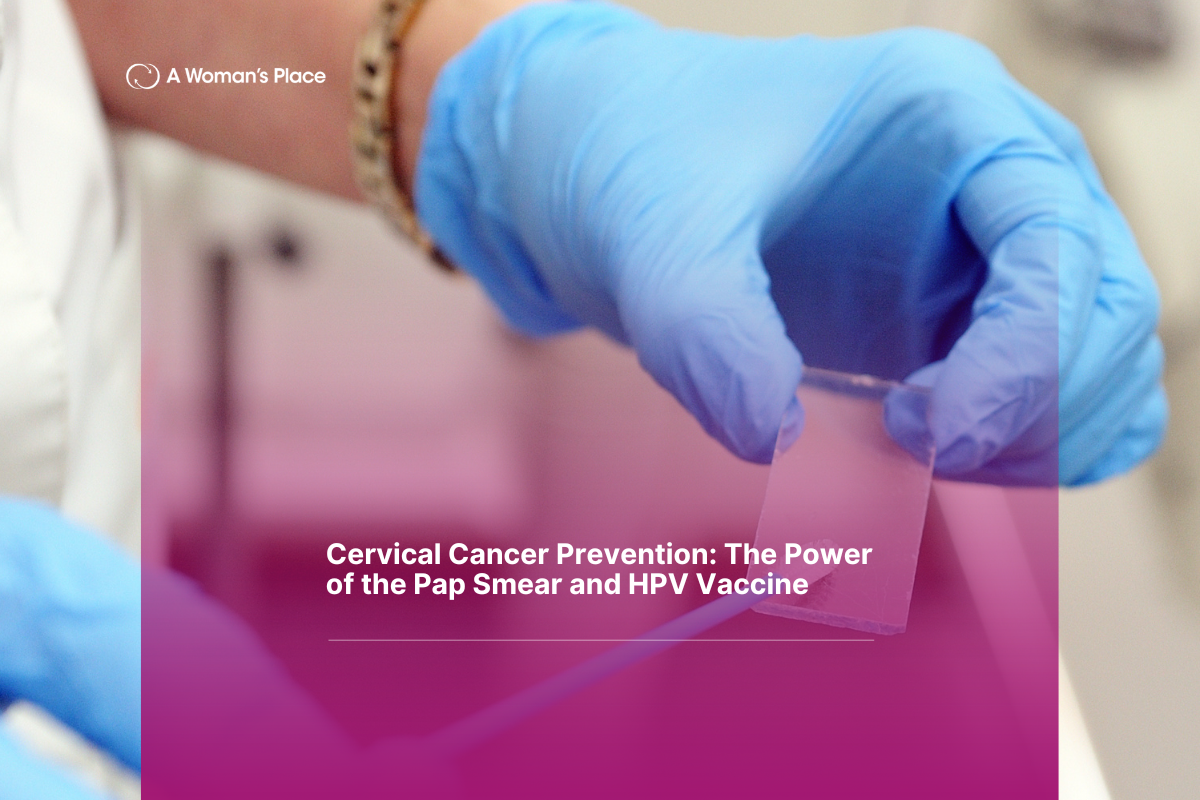
Cervical cancer has one of the strongest prevention stories in oncology. The combination of routine cervical screening and HPV vaccination has the documented potential to eliminate the vast majority of cervical cancer cases. And yet thousands of women in the United States are still diagnosed with cervical cancer each year, most of them in communities or age groups where screening has lapsed or vaccination rates remain low. At A Woman’s Place in Naples, Florida, we believe prevention starts with understanding exactly what is available, who it is for, and how these two tools work together. Here is the complete picture.
“It is usually very uncomfortable to have a gynecological procedure/pap smear, but not the case during this office visit. He participates in small talk for those of us who do so when we are slightly nervous. I would recommend him to a friend or co-worker. He made me feel comfortable and I didn’t feel that way emotionally or physically during the exam. ”
— A Woman’s Place Patient Testimonial
The HPV Connection
More than 99 percent of cervical cancers are caused by persistent infection with high-risk strains of human papillomavirus, or HPV. HPV is extraordinarily common. Most sexually active people will be exposed to HPV at some point, and in the majority of cases the immune system clears the virus without any intervention or noticeable symptoms. In a smaller percentage of infections, particularly those involving high-risk strains such as HPV 16 and 18, the virus persists and over time causes cellular changes in the cervix that, left undetected, can progress to cancer.
The process from initial HPV infection to invasive cervical cancer is slow, typically taking ten to fifteen years. This long window is precisely what makes both the vaccine and routine screening so effective: there is ample time to prevent, detect, and intervene before cancer ever develops.
The HPV Vaccine: Cancer Prevention Before Exposure
The HPV vaccine available today, Gardasil 9, provides protection against nine strains of HPV responsible for the majority of cervical cancers as well as other HPV-related cancers and genital warts. When given before first HPV exposure, the vaccine is nearly 100 percent effective at preventing infection with the strains it covers.
Routine vaccination is recommended for adolescents at age 11 or 12. The vaccine is most effective when given before any potential exposure to HPV, which is why earlier vaccination provides stronger protection. Catch-up vaccination is recommended through age 26 for those who were not vaccinated on schedule. Adults between 27 and 45 may discuss vaccination with their provider on an individual basis, weighing the likely benefit given their prior exposure history.
Vaccination does not replace screening. Women who have been vaccinated still need routine Pap smears and HPV testing, because the vaccine does not cover all HPV strains and does not protect against infections that may have occurred before vaccination.
The Pap Smear: Catching Changes Before They Become Cancer
The Pap smear, developed in the mid-twentieth century, works by collecting cells from the cervix and examining them for abnormalities. It can detect precancerous cellular changes, called cervical intraepithelial neoplasia (CIN), before they progress to invasive cancer. When combined with HPV co-testing, which checks for the presence of high-risk HPV strains alongside the Pap, the ability to identify women at elevated risk is strengthened further.
The Pap smear is one of the core components of the annual gynecological exam at A Woman’s Place. Current screening guidelines recommend Pap smears beginning at age 21, repeated every three years for women 21 to 29. Women 30 to 65 may choose a Pap smear alone every three years, HPV testing alone every five years, or co-testing every five years. Women over 65 who have had adequate prior screening with normal results can typically discontinue screening. Your provider will recommend the interval appropriate for your age and prior results.
What Happens When Results Are Abnormal
An abnormal Pap smear result is not a cancer diagnosis. The vast majority of abnormal results reflect minor cellular changes, often driven by transient HPV infection, that the immune system resolves on its own or that require monitoring rather than immediate treatment. When results indicate more significant changes, additional evaluation is recommended.
A colposcopy allows the provider to examine the cervix more closely under magnification and take biopsies of areas that appear abnormal. If precancerous cells are confirmed, treatment options including LEEP (loop electrosurgical excision procedure) or cryotherapy can remove the affected tissue before cancer develops. The goal throughout is to catch changes at a stage where intervention is straightforward, effective, and in most cases fertility-preserving.
Staying on Schedule
One of the most consistent findings in cervical cancer epidemiology is that many women diagnosed with cervical cancer had not had a Pap smear in five or more years before their diagnosis. Life circumstances can make it easy to let screenings lapse; a move, a change in insurance, a busy season of life. But returning to regular screening after a gap is simple and important.
If you are not sure when your last Pap smear was, or if you have never had one, your provider can review your history and determine what is needed. The annual gynecological exam at A Woman’s Place is the right starting point for any woman who wants to ensure her cervical cancer prevention is current.
“I am very pleased with Dr. Heitmann, he was very attentive to my concerns, he was very thorough.asked about everything I needed to get done at my age and when I had it done. Very gentle when inserting for my Pap smear this is my most concern. Thank you so much!!!!!”
— A Woman’s Place Patient Testimonial
Prevention Is Within Reach
The tools to prevent cervical cancer are available, proven, and accessible. The HPV vaccine and routine Pap smear screening, used together, represent one of the most effective cancer prevention strategies in all of medicine. At A Woman’s Place, these services are part of the comprehensive gynecology and wellness care we provide to women in Naples, Florida. Request an appointment or call us at (239) 513-0053 to schedule your next visit.
Cervical cancer has one of the strongest prevention stories in oncology. The combination of routine cervical screening and HPV vaccination has the documented potential to eliminate the vast majority of cervical cancer cases. And yet thousands of women in the United States are still diagnosed with cervical cancer each year, most of them in communities or age groups where screening has lapsed or vaccination rates remain low. At A Woman’s Place in Naples, Florida, we believe prevention starts with understanding exactly what is available, who it is for, and how these two tools work together. Here is the complete picture.
“It is usually very uncomfortable to have a gynecological procedure/pap smear, but not the case during this office visit. He participates in small talk for those of us who do so when we are slightly nervous. I would recommend him to a friend or co-worker. He made me feel comfortable and I didn’t feel that way emotionally or physically during the exam. ”
— A Woman’s Place Patient Testimonial
The HPV Connection
More than 99 percent of cervical cancers are caused by persistent infection with high-risk strains of human papillomavirus, or HPV. HPV is extraordinarily common. Most sexually active people will be exposed to HPV at some point, and in the majority of cases the immune system clears the virus without any intervention or noticeable symptoms. In a smaller percentage of infections, particularly those involving high-risk strains such as HPV 16 and 18, the virus persists and over time causes cellular changes in the cervix that, left undetected, can progress to cancer.
The process from initial HPV infection to invasive cervical cancer is slow, typically taking ten to fifteen years. This long window is precisely what makes both the vaccine and routine screening so effective: there is ample time to prevent, detect, and intervene before cancer ever develops.
The HPV Vaccine: Cancer Prevention Before Exposure
The HPV vaccine available today, Gardasil 9, provides protection against nine strains of HPV responsible for the majority of cervical cancers as well as other HPV-related cancers and genital warts. When given before first HPV exposure, the vaccine is nearly 100 percent effective at preventing infection with the strains it covers.
Routine vaccination is recommended for adolescents at age 11 or 12. The vaccine is most effective when given before any potential exposure to HPV, which is why earlier vaccination provides stronger protection. Catch-up vaccination is recommended through age 26 for those who were not vaccinated on schedule. Adults between 27 and 45 may discuss vaccination with their provider on an individual basis, weighing the likely benefit given their prior exposure history.
Vaccination does not replace screening. Women who have been vaccinated still need routine Pap smears and HPV testing, because the vaccine does not cover all HPV strains and does not protect against infections that may have occurred before vaccination.
The Pap Smear: Catching Changes Before They Become Cancer
The Pap smear, developed in the mid-twentieth century, works by collecting cells from the cervix and examining them for abnormalities. It can detect precancerous cellular changes, called cervical intraepithelial neoplasia (CIN), before they progress to invasive cancer. When combined with HPV co-testing, which checks for the presence of high-risk HPV strains alongside the Pap, the ability to identify women at elevated risk is strengthened further.
The Pap smear is one of the core components of the annual gynecological exam at A Woman’s Place. Current screening guidelines recommend Pap smears beginning at age 21, repeated every three years for women 21 to 29. Women 30 to 65 may choose a Pap smear alone every three years, HPV testing alone every five years, or co-testing every five years. Women over 65 who have had adequate prior screening with normal results can typically discontinue screening. Your provider will recommend the interval appropriate for your age and prior results.
What Happens When Results Are Abnormal
An abnormal Pap smear result is not a cancer diagnosis. The vast majority of abnormal results reflect minor cellular changes, often driven by transient HPV infection, that the immune system resolves on its own or that require monitoring rather than immediate treatment. When results indicate more significant changes, additional evaluation is recommended.
A colposcopy allows the provider to examine the cervix more closely under magnification and take biopsies of areas that appear abnormal. If precancerous cells are confirmed, treatment options including LEEP (loop electrosurgical excision procedure) or cryotherapy can remove the affected tissue before cancer develops. The goal throughout is to catch changes at a stage where intervention is straightforward, effective, and in most cases fertility-preserving.
Staying on Schedule
One of the most consistent findings in cervical cancer epidemiology is that many women diagnosed with cervical cancer had not had a Pap smear in five or more years before their diagnosis. Life circumstances can make it easy to let screenings lapse; a move, a change in insurance, a busy season of life. But returning to regular screening after a gap is simple and important.
If you are not sure when your last Pap smear was, or if you have never had one, your provider can review your history and determine what is needed. The annual gynecological exam at A Woman’s Place is the right starting point for any woman who wants to ensure her cervical cancer prevention is current.
“I am very pleased with Dr. Heitmann, he was very attentive to my concerns, he was very thorough.asked about everything I needed to get done at my age and when I had it done. Very gentle when inserting for my Pap smear this is my most concern. Thank you so much!!!!!”
— A Woman’s Place Patient Testimonial
Prevention Is Within Reach
The tools to prevent cervical cancer are available, proven, and accessible. The HPV vaccine and routine Pap smear screening, used together, represent one of the most effective cancer prevention strategies in all of medicine. At A Woman’s Place, these services are part of the comprehensive gynecology and wellness care we provide to women in Naples, Florida. Request an appointment or call us at (239) 513-0053 to schedule your next visit.