The phone rings a few days after your glucose test, or a message appears in your patient portal, and your stomach drops a little. Your result came back higher than expected. In an instant, your mind fills with questions. Did I do something wrong? Is my baby okay? What happens now?
Take a slow breath. What happens now is a clear, well-practiced plan, and you will not be carrying it out alone. November is American Diabetes Month, and at A Woman’s Place in Naples, we want every expecting mom to know exactly what to expect from the day of her results to the day she meets her baby.
First, What Your Result Really Means
The one-hour glucose test, usually done between 24 and 28 weeks, is a screening. It is designed to cast a wide net, so a high number does not mean you have gestational diabetes. It means we need a closer look. The next step is typically a three-hour glucose tolerance test, which involves fasting, a stronger glucose drink, and four blood draws. Many women pass this second test and need nothing further.
If two or more of those values are elevated, the diagnosis is gestational diabetes: blood sugar that runs higher than it should during pregnancy because hormones from the placenta interfere with insulin. The Centers for Disease Control and Prevention (CDC) estimates that it affects 5% to 9% of pregnancies in the United States each year. It is not caused by something you ate last week, and it is not a judgment on how you have cared for yourself.
Your First Week After a Diagnosis
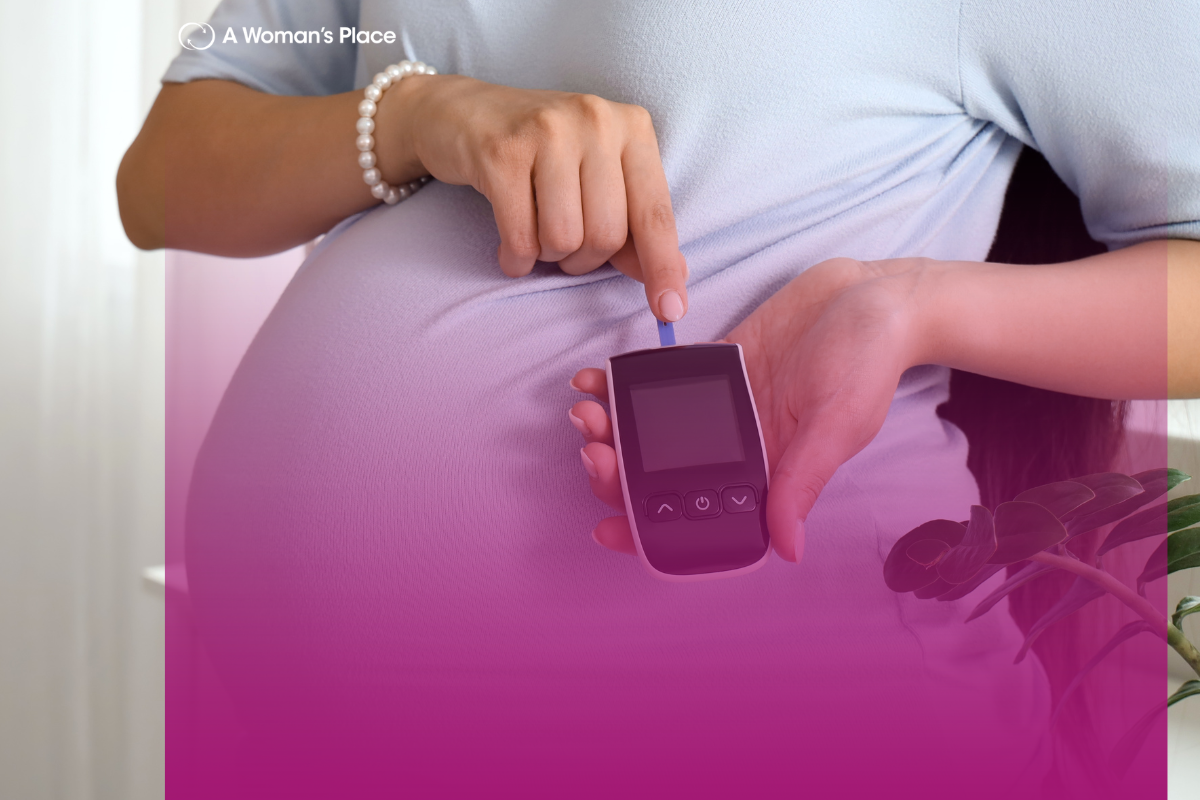
The early days are about learning, not perfection. We will show you how to check your blood sugar at home with a small meter, usually four times a day: once when you wake up and again after each meal. You will keep a simple log, on paper or in an app, and we will review it together at your visits.
Based on guidance from the American College of Obstetricians and Gynecologists (ACOG) and the American Diabetes Association (ADA), most women aim for these targets:
- Fasting: below 95 mg/dL
- One hour after a meal: below 140 mg/dL
- Two hours after a meal: below 120 mg/dL
Your provider will tell you which after-meal check to use. A reading outside the range now and then is expected. We look at patterns, not single numbers.
| A Woman’s Place Patient Testimonial
“Jessica always takes the time to educate and go over the positives/negatives of any and all testing/procedures: she gives examples and encourages her patients to do the research if still unsure. She supports informed consent of the patient. I feel safe with discussing my health with her.” |
Eating and Moving in a Way That Works
Food is the foundation of treatment, and it is more flexible than most women fear. You will not be asked to give up carbohydrates. The goal is to spread them through the day in three moderate meals and two or three snacks, and to pair them with protein and fiber so sugar enters your bloodstream gradually. Breakfast often needs the most attention, since blood sugar tends to be harder to control in the morning.
Small adjustments often make a big difference. Swapping juice for whole fruit, adding eggs or Greek yogurt to breakfast, and choosing whole grains over white bread are simple places to begin. If you would like more guidance, ask us about meeting with a diabetes educator or dietitian.
Movement helps your muscles use glucose. ACOG recommends about 150 minutes of moderate activity a week for most pregnant women, and a 10- to 15-minute walk after meals can noticeably improve your readings. In Southwest Florida, an early morning or evening stroll keeps you out of the midday heat.
When Medication Is Needed
For many women, nutrition and activity are enough. If your numbers stay above target after a week or two of steady effort, we will talk about medication. Insulin is the treatment ACOG and the ADA recommend first, because it does not cross the placenta. Needing it is common. It reflects how strongly your placenta’s hormones are working, not how hard you are trying.
How We Watch Over Your Baby
Good blood sugar control protects your baby from growing too large, from low blood sugar after birth, and from a more complicated delivery. To stay ahead of these risks, we monitor more closely as your pregnancy continues. That often means ultrasounds to follow your baby’s growth, performed in our office, along with visits every two weeks until 36 weeks and weekly after that.
If you need medication or have other risk factors, we may add nonstress tests in the third trimester, which track your baby’s heart rate for 20 to 30 minutes. Our team is experienced in managing high-risk pregnancies, and when a situation calls for it, we work alongside maternal-fetal medicine specialists.
Planning for Delivery
Most women with gestational diabetes go into labor on their own and deliver vaginally. Timing depends on how your blood sugar has been controlled. When it is well managed with nutrition and exercise alone, ACOG supports waiting for labor up to about 40 weeks and 6 days. When medication is needed, delivery is generally recommended during the 39th week. If we have concerns about your baby’s size, we will discuss your options openly and well in advance, so nothing about delivery day feels like a surprise.
During labor, your blood sugar is checked regularly. After birth, your baby’s blood sugar is checked as well, and early skin-to-skin contact and feeding help keep it stable.
After Your Baby Arrives
For most women, blood sugar returns to normal within hours to days of delivery, and home testing stops. One step remains. ACOG recommends a follow-up glucose test 4 to 12 weeks after birth, because about half of women who have had gestational diabetes develop type 2 diabetes later, according to the CDC. That test, along with regular screening at your annual visits, lets us catch any change early.
| A Woman’s Place Patient Testimonial
“Dr. Heitmann listened to my needs and made several recommendations, he helped find the best solution for me.” |
You Have a Team Behind You
A gestational diabetes diagnosis asks a lot of you for a few months. It also comes with something valuable: more attention, more information, and more chances to make sure you and your baby are thriving. Since 1988, A Woman’s Place has cared for growing families in Naples, and supporting moms through gestational diabetes is something we do every week.
If you have questions about your results or your plan, call our office at (239) 513-0053. To learn more about our pregnancy care, including CenteringPregnancy group visits, request an appointment. We will take this one step, and one reading, at a time.