By: A Woman’s Place in Naples, FL
May is Mental Health Awareness Month, a time to open the conversation about emotional wellbeing, reduce stigma, and remind women everywhere that their mental health matters just as much as their physical health. At A Woman’s Place in Naples, FL, we see this connection every single day. The truth is, for women, mental and physical health are rarely separate conversations. They are deeply, biologically intertwined and understanding that connection can be genuinely life-changing.
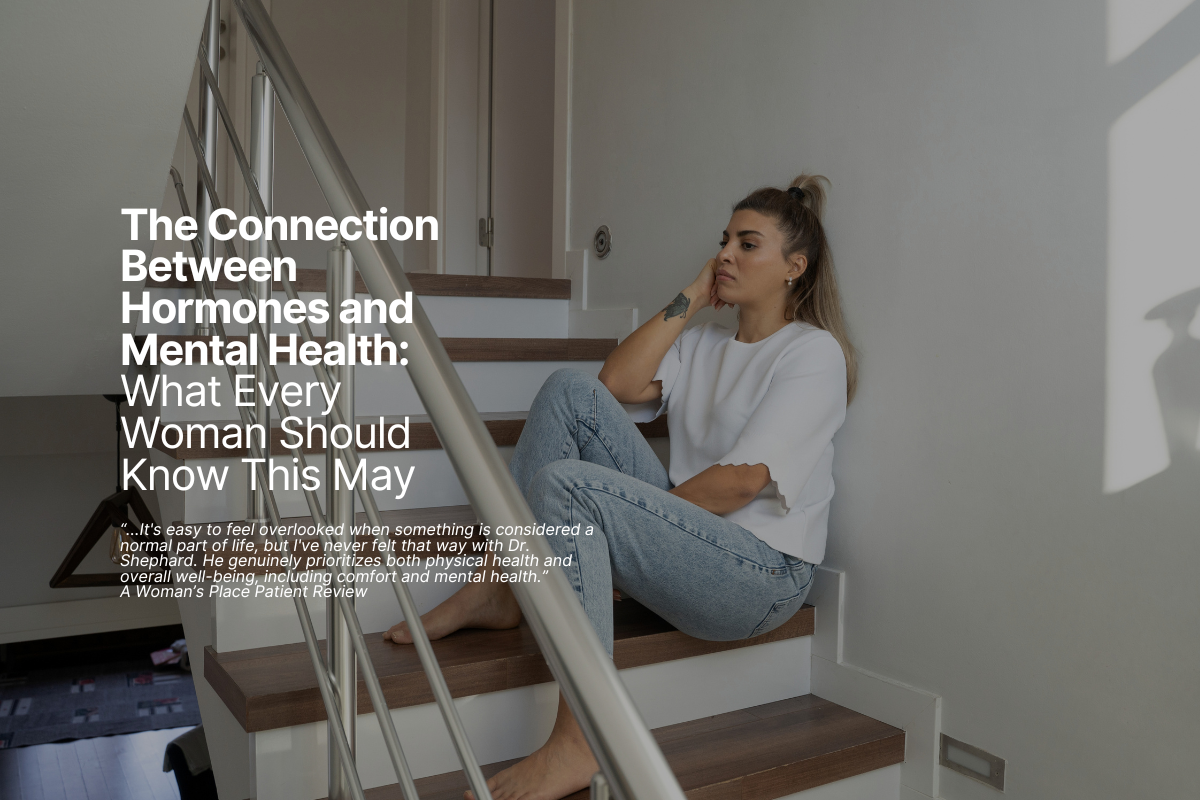
“I reached out through the portal with some postpartum concerns, and I truly appreciated that an appointment was scheduled to make sure everything was okay and to give me peace of mind while reviewing the results. Although everything came back normal, what meant the most was that Dr. Shephard took the time to discuss possible alternatives so I wouldn’t feel like I just had to “deal” with what I was experiencing. It’s easy to feel overlooked when something is considered a normal part of life, but I’ve never felt that way with Dr. Shephard. He genuinely prioritizes both physical health and overall well-being, including comfort and mental health.”
A Woman’s Place Patient Review
Your Hormones Are Talking — Are You Listening?
Estrogen, progesterone, and testosterone don’t just regulate your reproductive cycle; they play a significant role in how your brain functions. These hormones influence the production of serotonin and dopamine, the neurotransmitters most closely associated with mood, motivation, and emotional regulation. When hormone levels fluctuate, as they naturally do throughout the menstrual cycle, during pregnancy, postpartum, and in perimenopause; your mental health can shift right along with them.
This is not weakness. This is biology. And yet, so many women are told that their anxiety, irritability, sadness, or brain fog is simply stress; without anyone ever looking at the hormonal picture underneath. If you’ve ever felt like your emotions were on a rollercoaster you couldn’t explain, your hormones may be worth a closer look.
Premenstrual Dysphoric Disorder: More Than “Bad PMS”
Most women are familiar with premenstrual syndrome (PMS): the bloating, the cramps, the moodiness that arrives like clockwork before a period. But for some women, the emotional symptoms are severe enough to significantly disrupt daily life. This is known as premenstrual dysphoric disorder, or PMDD, and it affects an estimated 3 to 8 percent of women of reproductive age.
PMDD goes well beyond typical PMS. Women with PMDD may experience intense depression, hopelessness, extreme irritability, panic attacks, or difficulty functioning at work or in relationships, all in the one to two weeks before their period. Symptoms typically resolve within a few days of menstruation beginning. If this pattern sounds familiar, it is important to bring it up with your OBGYN. PMDD is a recognized medical condition with effective treatment options, including hormonal therapies, lifestyle modifications, and in some cases, medication.
Postpartum Depression: You Are Not Alone
The arrival of a new baby is supposed to be joyful and for many women, it is. But for up to one in five new mothers, the postpartum period brings something much darker: postpartum depression. Triggered by the dramatic drop in estrogen and progesterone after delivery, postpartum depression can cause persistent sadness, difficulty bonding with your baby, overwhelming anxiety, exhaustion, and feelings of inadequacy or worthlessness.
Postpartum depression is not a reflection of your love for your child or your ability to be a good mother. It is a medical condition, and it is treatable. If you or someone you love is experiencing these symptoms after giving birth, please reach out to your OB/GYN right away. Early intervention makes an enormous difference, and you deserve support during one of the most demanding seasons of life.
Perimenopause, Menopause, and the Mental Health Shift
The years leading up to menopause, perimenopause, can bring a surprising range of emotional changes that many women don’t associate with their hormones at all. Increased anxiety, new or worsening depression, mood swings, and a general sense of feeling unlike yourself are all common during this transition. These symptoms are directly linked to the erratic fluctuations in estrogen that characterize perimenopause, and they can begin years before periods actually stop.
Once menopause is reached: defined as 12 consecutive months without a period, lower estrogen levels can continue to affect mood and cognitive function. Women in menopause frequently report brain fog, low motivation, and emotional flatness. Hormone replacement therapy (HRT), including bioidentical hormone therapy and BioTE pellet therapy available at A Woman’s Place, has helped many women reclaim their sense of self during this transition. If you’re navigating perimenopause or menopause and your mental health is suffering, please know that relief is available.
Practical Steps You Can Take Right Now
While hormonal treatment can make a profound difference, there are also evidence-based lifestyle practices that support mental health alongside medical care. Regular physical activity, even a 30-minute walk along the Naples waterfront, has been shown to reduce anxiety and depression by boosting endorphins and supporting hormonal balance. Prioritizing sleep, limiting alcohol, eating a diet rich in whole foods and healthy fats, and maintaining social connections all contribute meaningfully to emotional wellbeing.
Mindfulness practices, journaling, and therapy can also be powerful tools, not as a replacement for medical care, but as a complement to it. There is no single answer to mental wellness, and the best approach is one that treats you as a whole person.
“Because he and his staff see me and to see me is to know me and I love them for that. And Dr. Heitmann and Gabby, Tiffany and so many more make me feel comfortable, nothing like my last doctor at all. And Dr. Heitmann came highly recommended so I’m glad I have a good doctor, friend therapist dealing with me LOL 🙂 I will tell everyone I know that’s female or male about Dr. Heitmann and thank God for the nurses talking about him not just on 1 floor of the hospital but damn every floor I had to go on or the cafeteria. And when I took a family to the hospital even when I wasn’t a patient for him that day, he took time out to check on me as if I had come to the hospital for myself. Now how many doctors do that because I’ve seen some doctors avoid you like the BLACK PLAGUE, but not Dr. Heitmann. So, thanks for taking care of me and listening to me Doc and checking my chart and just everything. And I’ll see for my next appointment.”
A Woman’s Place Patient Review
Start the Conversation With Your OB/GYN
This Mental Health Awareness Month, we want every woman in our community to know: you don’t have to figure this out alone, and you don’t have to simply push through. If your emotions feel out of control, if you’re struggling to feel like yourself, or if you suspect your hormones may be affecting your mental health: your OB/GYN is a wonderful place to start that conversation.
At A Woman’s Place, we take a whole-woman approach to care. We understand that how you feel emotionally is just as important as any lab result or screening outcome. Our providers are here to listen, to investigate, and to partner with you in finding solutions that actually work for your life. Call our Naples office today at 239-513-0053 or request an appointment online. Because you deserve to feel well, in every sense of the word.
By: A Woman’s Place in Naples, FL
May is Mental Health Awareness Month, a time to open the conversation about emotional wellbeing, reduce stigma, and remind women everywhere that their mental health matters just as much as their physical health. At A Woman’s Place in Naples, FL, we see this connection every single day. The truth is, for women, mental and physical health are rarely separate conversations. They are deeply, biologically intertwined and understanding that connection can be genuinely life-changing.
“I reached out through the portal with some postpartum concerns, and I truly appreciated that an appointment was scheduled to make sure everything was okay and to give me peace of mind while reviewing the results. Although everything came back normal, what meant the most was that Dr. Shephard took the time to discuss possible alternatives so I wouldn’t feel like I just had to “deal” with what I was experiencing. It’s easy to feel overlooked when something is considered a normal part of life, but I’ve never felt that way with Dr. Shephard. He genuinely prioritizes both physical health and overall well-being, including comfort and mental health.”
A Woman’s Place Patient Review
Your Hormones Are Talking — Are You Listening?
Estrogen, progesterone, and testosterone don’t just regulate your reproductive cycle; they play a significant role in how your brain functions. These hormones influence the production of serotonin and dopamine, the neurotransmitters most closely associated with mood, motivation, and emotional regulation. When hormone levels fluctuate, as they naturally do throughout the menstrual cycle, during pregnancy, postpartum, and in perimenopause; your mental health can shift right along with them.
This is not weakness. This is biology. And yet, so many women are told that their anxiety, irritability, sadness, or brain fog is simply stress; without anyone ever looking at the hormonal picture underneath. If you’ve ever felt like your emotions were on a rollercoaster you couldn’t explain, your hormones may be worth a closer look.
Premenstrual Dysphoric Disorder: More Than “Bad PMS”
Most women are familiar with premenstrual syndrome (PMS): the bloating, the cramps, the moodiness that arrives like clockwork before a period. But for some women, the emotional symptoms are severe enough to significantly disrupt daily life. This is known as premenstrual dysphoric disorder, or PMDD, and it affects an estimated 3 to 8 percent of women of reproductive age.
PMDD goes well beyond typical PMS. Women with PMDD may experience intense depression, hopelessness, extreme irritability, panic attacks, or difficulty functioning at work or in relationships, all in the one to two weeks before their period. Symptoms typically resolve within a few days of menstruation beginning. If this pattern sounds familiar, it is important to bring it up with your OBGYN. PMDD is a recognized medical condition with effective treatment options, including hormonal therapies, lifestyle modifications, and in some cases, medication.
Postpartum Depression: You Are Not Alone
The arrival of a new baby is supposed to be joyful and for many women, it is. But for up to one in five new mothers, the postpartum period brings something much darker: postpartum depression. Triggered by the dramatic drop in estrogen and progesterone after delivery, postpartum depression can cause persistent sadness, difficulty bonding with your baby, overwhelming anxiety, exhaustion, and feelings of inadequacy or worthlessness.
Postpartum depression is not a reflection of your love for your child or your ability to be a good mother. It is a medical condition, and it is treatable. If you or someone you love is experiencing these symptoms after giving birth, please reach out to your OB/GYN right away. Early intervention makes an enormous difference, and you deserve support during one of the most demanding seasons of life.
Perimenopause, Menopause, and the Mental Health Shift
The years leading up to menopause, perimenopause, can bring a surprising range of emotional changes that many women don’t associate with their hormones at all. Increased anxiety, new or worsening depression, mood swings, and a general sense of feeling unlike yourself are all common during this transition. These symptoms are directly linked to the erratic fluctuations in estrogen that characterize perimenopause, and they can begin years before periods actually stop.
Once menopause is reached: defined as 12 consecutive months without a period, lower estrogen levels can continue to affect mood and cognitive function. Women in menopause frequently report brain fog, low motivation, and emotional flatness. Hormone replacement therapy (HRT), including bioidentical hormone therapy and BioTE pellet therapy available at A Woman’s Place, has helped many women reclaim their sense of self during this transition. If you’re navigating perimenopause or menopause and your mental health is suffering, please know that relief is available.
Practical Steps You Can Take Right Now
While hormonal treatment can make a profound difference, there are also evidence-based lifestyle practices that support mental health alongside medical care. Regular physical activity, even a 30-minute walk along the Naples waterfront, has been shown to reduce anxiety and depression by boosting endorphins and supporting hormonal balance. Prioritizing sleep, limiting alcohol, eating a diet rich in whole foods and healthy fats, and maintaining social connections all contribute meaningfully to emotional wellbeing.
Mindfulness practices, journaling, and therapy can also be powerful tools, not as a replacement for medical care, but as a complement to it. There is no single answer to mental wellness, and the best approach is one that treats you as a whole person.
“Because he and his staff see me and to see me is to know me and I love them for that. And Dr. Heitmann and Gabby, Tiffany and so many more make me feel comfortable, nothing like my last doctor at all. And Dr. Heitmann came highly recommended so I’m glad I have a good doctor, friend therapist dealing with me LOL 🙂 I will tell everyone I know that’s female or male about Dr. Heitmann and thank God for the nurses talking about him not just on 1 floor of the hospital but damn every floor I had to go on or the cafeteria. And when I took a family to the hospital even when I wasn’t a patient for him that day, he took time out to check on me as if I had come to the hospital for myself. Now how many doctors do that because I’ve seen some doctors avoid you like the BLACK PLAGUE, but not Dr. Heitmann. So, thanks for taking care of me and listening to me Doc and checking my chart and just everything. And I’ll see for my next appointment.”
A Woman’s Place Patient Review
Start the Conversation With Your OB/GYN
This Mental Health Awareness Month, we want every woman in our community to know: you don’t have to figure this out alone, and you don’t have to simply push through. If your emotions feel out of control, if you’re struggling to feel like yourself, or if you suspect your hormones may be affecting your mental health: your OB/GYN is a wonderful place to start that conversation.
At A Woman’s Place, we take a whole-woman approach to care. We understand that how you feel emotionally is just as important as any lab result or screening outcome. Our providers are here to listen, to investigate, and to partner with you in finding solutions that actually work for your life. Call our Naples office today at 239-513-0053 or request an appointment online. Because you deserve to feel well, in every sense of the word.