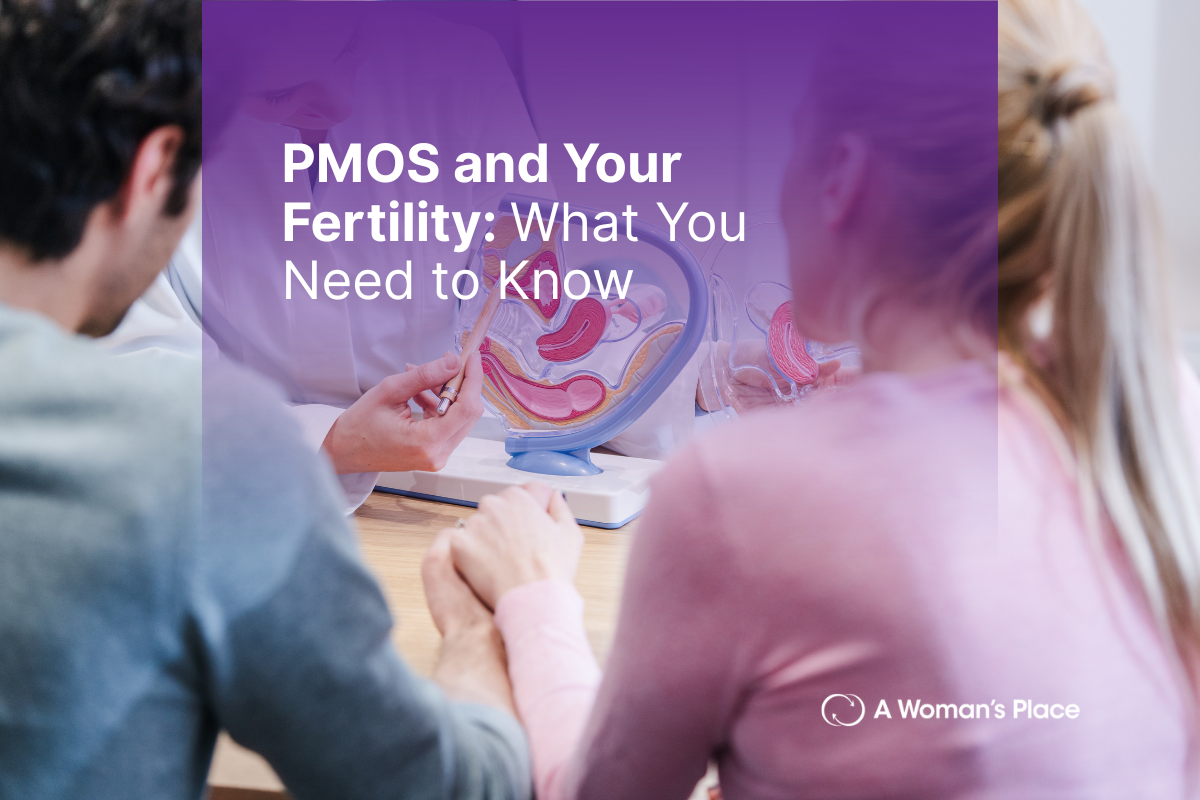
Polyendocrine Metabolic Ovarian Syndrome, known as PMOS and formerly called PCOS (polycystic ovary syndrome), is one of the leading causes of female infertility. It is also one of the most treatable. For women who have been trying to conceive without success, a PMOS diagnosis can bring both the frustration of understanding why conception has been difficult and the relief of knowing that effective options exist. At A Woman’s Place in Naples, Florida, we want every woman navigating this experience to have clear, accurate information about how PMOS affects fertility and what the path forward looks like.
“Dr. Shepherd provided with tons of information on PCOS, what vitamins I should take daily, and a new lifestyle to try to see if it helps me feel better and lose some weight.”
— A Woman’s Place Patient Testimonial
Why the Name Changed
Before exploring the fertility implications, it helps to understand why the name PCOS became PMOS. The original name, polycystic ovary syndrome, implied that the condition’s defining feature was ovarian cysts, when in fact many women with the diagnosis have no cysts, and the ovaries are not the only system involved. The new name, Polyendocrine Metabolic Ovarian Syndrome, acknowledges that this is a systemic, multi-hormonal condition with metabolic components including insulin resistance that play a central role. For women, this framing matters because effective management means addressing the full hormonal picture, not just one symptom.
How PMOS Disrupts Ovulation
The most direct way PMOS affects fertility is by disrupting ovulation. In a normal menstrual cycle, a cascade of hormonal signals from the hypothalamus and pituitary gland triggers the development of a follicle and, eventually, the release of a mature egg. In PMOS, this process is frequently disrupted. Elevated androgen levels and insulin resistance interfere with the hormonal signaling that drives follicle development, resulting in follicles that begin to develop but do not fully mature or release an egg.
When ovulation does not occur regularly, pregnancy becomes difficult to achieve. This form of infertility is called anovulatory infertility, and PMOS is one of its most common causes. The good news is that anovulatory infertility responds well to treatment. Most women with PMOS who pursue appropriate medical care are able to ovulate with assistance and have successful pregnancies.
Other Fertility-Related Considerations
Egg quality: Some research suggests that the hormonal environment of PMOS may affect egg quality over time, though this is an area of ongoing investigation. For most women with PMOS who receive appropriate treatment, egg quality is not a primary barrier to conception.
Endometrial receptivity: The chronic anovulation of PMOS means the uterine lining is exposed to estrogen without the regular progesterone balance that follows ovulation. This can affect endometrial receptivity, the uterine lining’s readiness to support a fertilized embryo. Restoring more regular cycles, whether naturally or with assistance, helps normalize the endometrial environment.
Elevated miscarriage risk: Women with PMOS have a somewhat higher risk of early pregnancy loss than women without the condition, likely related to insulin resistance, hormonal imbalances, and endometrial factors. This risk can be reduced with appropriate preconception management, including addressing insulin resistance and optimizing hormonal balance before conception.
Preconception Care for Women With PMOS
For women with PMOS who are planning to conceive, starting the conversation with a provider before trying is worthwhile. Preconception care for PMOS focuses on optimizing the hormonal and metabolic environment before pregnancy begins. This typically includes:
Lifestyle modifications: Even modest weight loss, in the range of 5 to 10 percent of body weight, can restore ovulation in some women with PMOS who are overweight or obese. Dietary approaches that reduce insulin spikes and regular physical activity that improves insulin sensitivity are the most evidence-supported starting points.
Metabolic optimization: Folic acid supplementation, review of any current medications for pregnancy safety, and in some cases metformin to improve insulin sensitivity before conception are standard components of preconception care for PMOS.
Ovulation tracking: Before moving to medication-assisted ovulation induction, monitoring cycles with ovulation predictor kits or basal body temperature tracking can help clarify whether ovulation is occurring and when.
Ovulation Induction Options
When ovulation is not occurring adequately on its own, medication-assisted induction is the next step. Letrozole has become the first-line agent for ovulation induction in PMOS, with strong evidence showing higher ovulation and pregnancy rates than older alternatives. Clomiphene citrate is also widely used and effective for many women. Injectable gonadotropins are an option when oral agents do not produce an adequate response, though they require closer monitoring. Your provider will recommend the most appropriate approach based on your specific hormonal profile, prior treatment history, and other fertility factors.
“Dr. Stephanie Jones was very kind, took her time and very thorough with her explanations. “
— A Woman’s Place Patient Testimonial
The Emotional Dimension of Fertility Challenges With PMOS
Navigating fertility challenges is emotionally demanding, and PMOS adds its own layer. Many women spend years before diagnosis experiencing unexplained cycles and feeling unheard. A diagnosis can bring both clarity and grief. The emotional experience deserves acknowledgment and support alongside clinical management. At A Woman’s Place, we approach care with compassion and take time to explain options, answer questions, and support women at every stage of the fertility journey. Request an appointment or call (239) 513-0053 to speak with our team.
Women with PMOS who do conceive have a higher risk of certain pregnancy complications, including gestational diabetes (related to the underlying insulin resistance), preeclampsia, and preterm birth. This does not mean pregnancy is unsafe, but it does mean that prenatal care should include appropriate monitoring for these complications. A Woman’s Place provides comprehensive obstetrics and prenatal care for women navigating pregnancy with PMOS and other complex conditions.
If you have PMOS and are thinking about pregnancy, or if you have been trying to conceive without success and suspect PMOS may be a factor, we encourage you to schedule a consultation with our team. Request an appointment at A Woman’s Place in Naples, Florida, or call us at (239) 513-0053.
Polyendocrine Metabolic Ovarian Syndrome, known as PMOS and formerly called PCOS (polycystic ovary syndrome), is one of the leading causes of female infertility. It is also one of the most treatable. For women who have been trying to conceive without success, a PMOS diagnosis can bring both the frustration of understanding why conception has been difficult and the relief of knowing that effective options exist. At A Woman’s Place in Naples, Florida, we want every woman navigating this experience to have clear, accurate information about how PMOS affects fertility and what the path forward looks like.
“Dr. Shepherd provided with tons of information on PCOS, what vitamins I should take daily, and a new lifestyle to try to see if it helps me feel better and lose some weight.”
— A Woman’s Place Patient Testimonial
Why the Name Changed
Before exploring the fertility implications, it helps to understand why the name PCOS became PMOS. The original name, polycystic ovary syndrome, implied that the condition’s defining feature was ovarian cysts, when in fact many women with the diagnosis have no cysts, and the ovaries are not the only system involved. The new name, Polyendocrine Metabolic Ovarian Syndrome, acknowledges that this is a systemic, multi-hormonal condition with metabolic components including insulin resistance that play a central role. For women, this framing matters because effective management means addressing the full hormonal picture, not just one symptom.
How PMOS Disrupts Ovulation
The most direct way PMOS affects fertility is by disrupting ovulation. In a normal menstrual cycle, a cascade of hormonal signals from the hypothalamus and pituitary gland triggers the development of a follicle and, eventually, the release of a mature egg. In PMOS, this process is frequently disrupted. Elevated androgen levels and insulin resistance interfere with the hormonal signaling that drives follicle development, resulting in follicles that begin to develop but do not fully mature or release an egg.
When ovulation does not occur regularly, pregnancy becomes difficult to achieve. This form of infertility is called anovulatory infertility, and PMOS is one of its most common causes. The good news is that anovulatory infertility responds well to treatment. Most women with PMOS who pursue appropriate medical care are able to ovulate with assistance and have successful pregnancies.
Other Fertility-Related Considerations
Egg quality: Some research suggests that the hormonal environment of PMOS may affect egg quality over time, though this is an area of ongoing investigation. For most women with PMOS who receive appropriate treatment, egg quality is not a primary barrier to conception.
Endometrial receptivity: The chronic anovulation of PMOS means the uterine lining is exposed to estrogen without the regular progesterone balance that follows ovulation. This can affect endometrial receptivity, the uterine lining’s readiness to support a fertilized embryo. Restoring more regular cycles, whether naturally or with assistance, helps normalize the endometrial environment.
Elevated miscarriage risk: Women with PMOS have a somewhat higher risk of early pregnancy loss than women without the condition, likely related to insulin resistance, hormonal imbalances, and endometrial factors. This risk can be reduced with appropriate preconception management, including addressing insulin resistance and optimizing hormonal balance before conception.
Preconception Care for Women With PMOS
For women with PMOS who are planning to conceive, starting the conversation with a provider before trying is worthwhile. Preconception care for PMOS focuses on optimizing the hormonal and metabolic environment before pregnancy begins. This typically includes:
Lifestyle modifications: Even modest weight loss, in the range of 5 to 10 percent of body weight, can restore ovulation in some women with PMOS who are overweight or obese. Dietary approaches that reduce insulin spikes and regular physical activity that improves insulin sensitivity are the most evidence-supported starting points.
Metabolic optimization: Folic acid supplementation, review of any current medications for pregnancy safety, and in some cases metformin to improve insulin sensitivity before conception are standard components of preconception care for PMOS.
Ovulation tracking: Before moving to medication-assisted ovulation induction, monitoring cycles with ovulation predictor kits or basal body temperature tracking can help clarify whether ovulation is occurring and when.
Ovulation Induction Options
When ovulation is not occurring adequately on its own, medication-assisted induction is the next step. Letrozole has become the first-line agent for ovulation induction in PMOS, with strong evidence showing higher ovulation and pregnancy rates than older alternatives. Clomiphene citrate is also widely used and effective for many women. Injectable gonadotropins are an option when oral agents do not produce an adequate response, though they require closer monitoring. Your provider will recommend the most appropriate approach based on your specific hormonal profile, prior treatment history, and other fertility factors.
“Dr. Stephanie Jones was very kind, took her time and very thorough with her explanations. “
— A Woman’s Place Patient Testimonial
The Emotional Dimension of Fertility Challenges With PMOS
Navigating fertility challenges is emotionally demanding, and PMOS adds its own layer. Many women spend years before diagnosis experiencing unexplained cycles and feeling unheard. A diagnosis can bring both clarity and grief. The emotional experience deserves acknowledgment and support alongside clinical management. At A Woman’s Place, we approach care with compassion and take time to explain options, answer questions, and support women at every stage of the fertility journey. Request an appointment or call (239) 513-0053 to speak with our team.
Women with PMOS who do conceive have a higher risk of certain pregnancy complications, including gestational diabetes (related to the underlying insulin resistance), preeclampsia, and preterm birth. This does not mean pregnancy is unsafe, but it does mean that prenatal care should include appropriate monitoring for these complications. A Woman’s Place provides comprehensive obstetrics and prenatal care for women navigating pregnancy with PMOS and other complex conditions.
If you have PMOS and are thinking about pregnancy, or if you have been trying to conceive without success and suspect PMOS may be a factor, we encourage you to schedule a consultation with our team. Request an appointment at A Woman’s Place in Naples, Florida, or call us at (239) 513-0053.