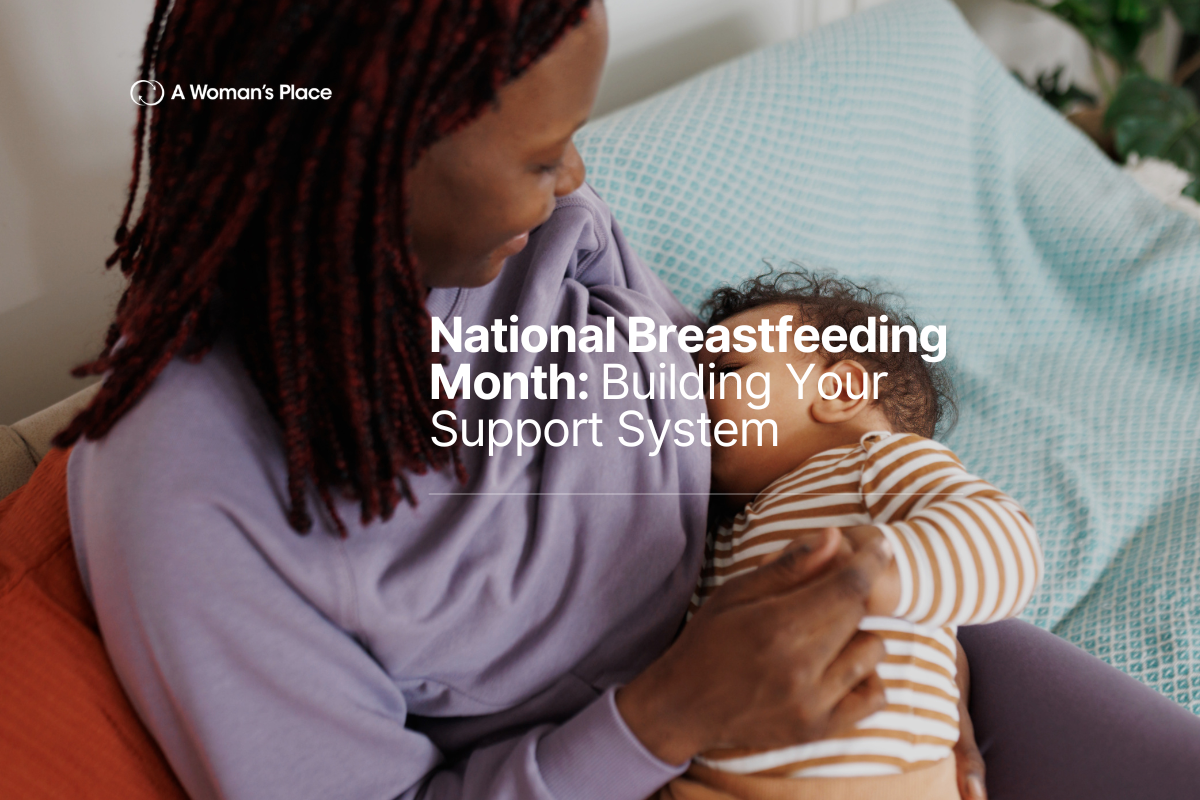
If you are currently breastfeeding, or getting ready to, you may have already noticed that the advice can come from everywhere: your mother, your best friend, a Facebook group, a YouTube video at 2 AM. Some of it is helpful. Some of it is well-meaning but wrong. And a lot of it can leave you feeling more uncertain than when you started.
Here is the thing about breastfeeding: it is rarely something you figure out entirely on your own, and you are not supposed to. The moms who tend to have the most positive breastfeeding experiences are often not the ones who read the most books. They are the ones who built a support system before they needed it and leaned on it when things got hard.
August is National Breastfeeding Month, and we want to talk about what that support system can look like, who belongs in it, and how to find help when you are not sure where to turn.
At A Woman’s Place, we have been supporting women in Naples through every stage of reproductive life since 1988. Our obstetrics and reproduction team walks with you from your first prenatal visit through your postpartum recovery, and that includes your breastfeeding experience.
| “All the staff are so nice and Jessica is the best, knowledgeable and open to talk to. It’s new and a good experience for me, it is nice to have a group of women going through the same journey together and to share our experience.”
– A Woman’s Place Patient Testimonial |
Why Support Makes Such a Difference
Breastfeeding is a learned skill for both you and your baby, and the learning curve can be steep, especially in the first two weeks. Research consistently shows that women who have adequate support, whether from a partner, a lactation consultant, a provider, or a peer, breastfeed longer and report more positive experiences than those who feel like they are figuring it out alone.
This is not a reflection of effort or love for your baby. It is simply the reality that breastfeeding, like most worthwhile things, is easier with the right people in your corner.
Start Building Your Team Before Baby Arrives
One of the best things you can do during pregnancy is identify your support resources before you need them. Here is who to think about:
Your OB or Midwife
Your prenatal provider is your first point of contact for breastfeeding questions, both before and after birth. If you have concerns about your anatomy, previous breast surgeries, or health conditions that might affect milk production, your provider can address these in pregnancy so you go into it with clear expectations. Do not wait until you are struggling to bring these up.
A Lactation Consultant
A certified lactation consultant, often called an IBCLC, is a specialist trained specifically in breastfeeding support. They can evaluate your baby’s latch, assess for tongue tie, help with positioning, and troubleshoot problems that feel impossible to solve on your own. Many hospitals offer lactation support in the first days after delivery. Later when at home, outpatient visits with a clinic and home visits with a consultant are always available. If cost is a concern, many insurance plans cover lactation services, so it is worth checking your benefits before birth.
At A Woman’s Place, we can provide suggestions and referrals. Check out these options available:
Lactation Whisperer makes home visits to provide the attention and care where you need it most (they have also led instructive discussions with our Centering Pregnancy groups).
Simplifed online support network that provides resources and connects you directly to professionals when you need it.
Udder Wellness led by a local RN and breastfeeding consultant offering home visits and group classes where you can meet other moms and share even more ideas. Group classes are offered monthly on Saturdays and are hosted in our office. Sign up for the Udder Wellness classes at this link!
Your Partner or a Trusted Support Person
Breastfeeding can be physically and emotionally demanding, especially in the early weeks. Having someone at home who understands what you are going through, brings you water without being asked, handles the baby when you need a break, and offers encouragement rather than unsolicited opinions makes a measurable difference. Talk with your partner before the baby arrives about what support will look like in practice. Be specific on what your needs will be and what you need at the moment.
A Peer Support Community
There is something powerful about talking to someone who has been exactly where you are. La Leche League groups, hospital-based breastfeeding support groups, and online communities for nursing moms can all provide encouragement, practical tips, and the reassurance that what you are experiencing is “normal”.
Sign up for an Udder Wellness class hosted conveniently at our office, and you may learn more than expected or meet a new friend!
Common Challenges and Who Can Help
Knowing where to turn when something comes up is half the battle. Here is a quick guide:
- Painful latch or nipple damage: Start with a lactation consultant to assess latch and rule out tongue tie. Your OB or midwife can treat any infections that develop.
- Concerns about low milk supply: Your provider can evaluate whether supply is truly low or whether your baby is transferring milk effectively. A lactation consultant can help optimize positioning and pumping strategy.
- Engorgement: Often resolves with frequent nursing and cold compresses. If you develop a hard, red, warm area in your breast along with fever or flu-like symptoms, call your provider promptly as this may be mastitis, a breast infection that is very common and very treatable.
- Returning to work: Your provider and a lactation consultant can help you create a pumping plan that works with your schedule and protects your supply.
- Feelings of dread, sadness, or anxiety around nursing: Please tell your provider. Postpartum mood concerns are common and respond well to support. You deserve care for your emotional wellbeing too.
What If Breastfeeding Does Not Work Out?
Sometimes, despite every effort and all the right support, breastfeeding does not go as hoped. And that is okay. Your worth as a mother is not measured by how you feed your baby. If you need to supplement with formula, transition to formula feeding, or simply reach a point where the cost to your physical or mental health outweighs the benefits, that is a valid decision that your care team will support without judgment.
The goal is a fed baby and a well mother. How you get there is your choice.
You Do Not Have to Do This Alone
Whatever your breastfeeding journey looks like, our team at A Woman’s Place is here to support you through it. Our obstetrics and postpartum care extends well beyond delivery, because we know that the weeks and months after birth are when so many women need the most care and the most compassion. We are always a phone call (or portal message) away.
| “I learned a lot about pregnancy and birth, that I don’t think I would have learned otherwise. It was helpful to be in discussions with other women all at a similar stage and going through similar issues together.” —A Woman’s Place Centering Participant Testimonial |
To learn more or schedule an appointment, Request an appointment at A Woman’s Place or call us at 239.513.0053.
If you are currently breastfeeding, or getting ready to, you may have already noticed that the advice can come from everywhere: your mother, your best friend, a Facebook group, a YouTube video at 2 AM. Some of it is helpful. Some of it is well-meaning but wrong. And a lot of it can leave you feeling more uncertain than when you started.
Here is the thing about breastfeeding: it is rarely something you figure out entirely on your own, and you are not supposed to. The moms who tend to have the most positive breastfeeding experiences are often not the ones who read the most books. They are the ones who built a support system before they needed it and leaned on it when things got hard.
August is National Breastfeeding Month, and we want to talk about what that support system can look like, who belongs in it, and how to find help when you are not sure where to turn.
At A Woman’s Place, we have been supporting women in Naples through every stage of reproductive life since 1988. Our obstetrics and reproduction team walks with you from your first prenatal visit through your postpartum recovery, and that includes your breastfeeding experience.
| “All the staff are so nice and Jessica is the best, knowledgeable and open to talk to. It’s new and a good experience for me, it is nice to have a group of women going through the same journey together and to share our experience.”
– A Woman’s Place Patient Testimonial |
Why Support Makes Such a Difference
Breastfeeding is a learned skill for both you and your baby, and the learning curve can be steep, especially in the first two weeks. Research consistently shows that women who have adequate support, whether from a partner, a lactation consultant, a provider, or a peer, breastfeed longer and report more positive experiences than those who feel like they are figuring it out alone.
This is not a reflection of effort or love for your baby. It is simply the reality that breastfeeding, like most worthwhile things, is easier with the right people in your corner.
Start Building Your Team Before Baby Arrives
One of the best things you can do during pregnancy is identify your support resources before you need them. Here is who to think about:
Your OB or Midwife
Your prenatal provider is your first point of contact for breastfeeding questions, both before and after birth. If you have concerns about your anatomy, previous breast surgeries, or health conditions that might affect milk production, your provider can address these in pregnancy so you go into it with clear expectations. Do not wait until you are struggling to bring these up.
A Lactation Consultant
A certified lactation consultant, often called an IBCLC, is a specialist trained specifically in breastfeeding support. They can evaluate your baby’s latch, assess for tongue tie, help with positioning, and troubleshoot problems that feel impossible to solve on your own. Many hospitals offer lactation support in the first days after delivery. Later when at home, outpatient visits with a clinic and home visits with a consultant are always available. If cost is a concern, many insurance plans cover lactation services, so it is worth checking your benefits before birth.
At A Woman’s Place, we can provide suggestions and referrals. Check out these options available:
Lactation Whisperer makes home visits to provide the attention and care where you need it most (they have also led instructive discussions with our Centering Pregnancy groups).
Simplifed online support network that provides resources and connects you directly to professionals when you need it.
Udder Wellness led by a local RN and breastfeeding consultant offering home visits and group classes where you can meet other moms and share even more ideas. Group classes are offered monthly on Saturdays and are hosted in our office. Sign up for the Udder Wellness classes at this link!
Your Partner or a Trusted Support Person
Breastfeeding can be physically and emotionally demanding, especially in the early weeks. Having someone at home who understands what you are going through, brings you water without being asked, handles the baby when you need a break, and offers encouragement rather than unsolicited opinions makes a measurable difference. Talk with your partner before the baby arrives about what support will look like in practice. Be specific on what your needs will be and what you need at the moment.
A Peer Support Community
There is something powerful about talking to someone who has been exactly where you are. La Leche League groups, hospital-based breastfeeding support groups, and online communities for nursing moms can all provide encouragement, practical tips, and the reassurance that what you are experiencing is “normal”.
Sign up for an Udder Wellness class hosted conveniently at our office, and you may learn more than expected or meet a new friend!
Common Challenges and Who Can Help
Knowing where to turn when something comes up is half the battle. Here is a quick guide:
- Painful latch or nipple damage: Start with a lactation consultant to assess latch and rule out tongue tie. Your OB or midwife can treat any infections that develop.
- Concerns about low milk supply: Your provider can evaluate whether supply is truly low or whether your baby is transferring milk effectively. A lactation consultant can help optimize positioning and pumping strategy.
- Engorgement: Often resolves with frequent nursing and cold compresses. If you develop a hard, red, warm area in your breast along with fever or flu-like symptoms, call your provider promptly as this may be mastitis, a breast infection that is very common and very treatable.
- Returning to work: Your provider and a lactation consultant can help you create a pumping plan that works with your schedule and protects your supply.
- Feelings of dread, sadness, or anxiety around nursing: Please tell your provider. Postpartum mood concerns are common and respond well to support. You deserve care for your emotional wellbeing too.
What If Breastfeeding Does Not Work Out?
Sometimes, despite every effort and all the right support, breastfeeding does not go as hoped. And that is okay. Your worth as a mother is not measured by how you feed your baby. If you need to supplement with formula, transition to formula feeding, or simply reach a point where the cost to your physical or mental health outweighs the benefits, that is a valid decision that your care team will support without judgment.
The goal is a fed baby and a well mother. How you get there is your choice.
You Do Not Have to Do This Alone
Whatever your breastfeeding journey looks like, our team at A Woman’s Place is here to support you through it. Our obstetrics and postpartum care extends well beyond delivery, because we know that the weeks and months after birth are when so many women need the most care and the most compassion. We are always a phone call (or portal message) away.
| “I learned a lot about pregnancy and birth, that I don’t think I would have learned otherwise. It was helpful to be in discussions with other women all at a similar stage and going through similar issues together.” —A Woman’s Place Centering Participant Testimonial |
To learn more or schedule an appointment, Request an appointment at A Woman’s Place or call us at 239.513.0053.