By: A Woman’s Place in Naples, FL
As women move through their 30s and 40s, they often juggle careers, family, relationships, and health priorities — and sometimes the subtle signals their bodies send can be easy to overlook. One of those signals may be perimenopause, a transitional phase that precedes menopause and can begin years before a woman’s final menstrual period. While often associated with women in their late 40s and early 50s, perimenopause can — and does — begin earlier for many women.
Understanding perimenopause is essential for recognizing changes and seeking guidance that supports comfort, long-term well-being, and quality of life. At A Woman’s Place in Naples, we’re committed to empowering women with accurate information and personalized care during every stage of life — including this important transition.
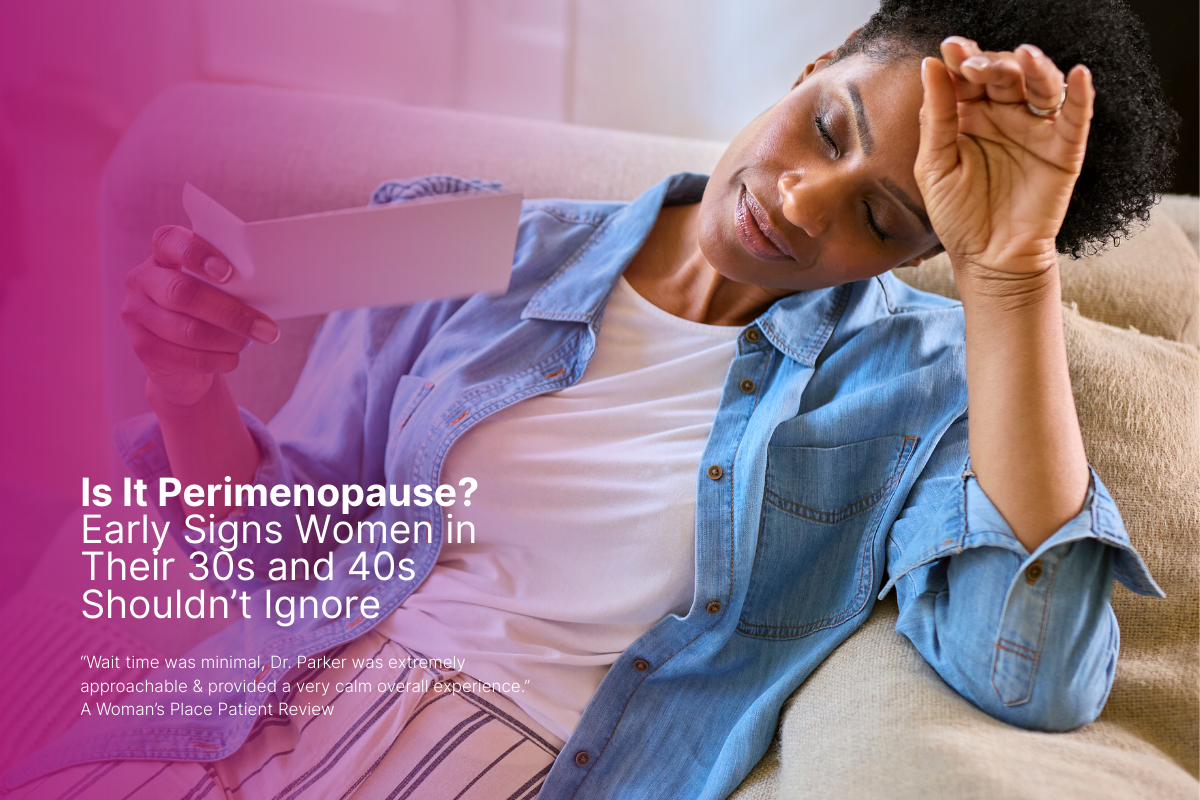
“Wait time was minimal, Dr. Parker was extremely approachable & provided a very calm overall experience.”
A Woman’s Place Patient Review
What Is Perimenopause?
Perimenopause is the biological transition period leading up to menopause, during which a woman’s ovaries gradually produce less estrogen and progesterone. This shift in hormone levels can affect menstrual patterns, physical health, emotional state, and overall well-being.
Menopause itself is defined as the point when a woman has gone 12 consecutive months without a menstrual period. Perimenopause — sometimes called the “menopause transition” — typically begins several years before that final period and may last anywhere from 2 to 10 years.
While age is an important factor, it’s not the only one. Some women experience perimenopause in their mid-30s to early 40s, and symptoms can vary widely in their intensity and impact.
Common Early Signs Women Shouldn’t Ignore
Because the hormone changes of perimenopause are gradual, early symptoms can be subtle — and often attributed to stress, aging, or lifestyle factors. However, these signs shouldn’t be dismissed without understanding their potential connection to perimenopause:
1. Irregular Periods
One of the earliest and most noticeable signs is a change in menstrual cycles. Perimenopause can cause periods to become shorter, longer, heavier, lighter, or more unpredictable. You may also skip cycles entirely or notice increasing variability month to month.
Keep in mind that irregularity doesn’t always mean a serious problem, but tracking changes can help both you and your healthcare provider determine whether perimenopause or another condition may be involved.
2. Mood Changes & Emotional Shifts
Hormone fluctuations can influence neurotransmitters in the brain, leading to:
- Mood swings
- Irritability
- Anxiety or increased emotional sensitivity
These emotional changes can feel abrupt or unrelated to life stressors, which is why it’s important to consider hormonal transitions when symptoms arise.
3. Sleep Disturbances
You may find yourself struggling to fall asleep, waking frequently during the night, or feeling unrested. While stress and lifestyle habits can affect sleep, perimenopause-related hormone shifts can disrupt the body’s sleep-wake cycle and temperature regulation — especially if night sweats are present.
4. Changes in Libido & Sexual Health
Decreasing estrogen levels can affect vaginal lubrication and sexual desire. Some women experience discomfort during intercourse or a reduced interest in sex. Addressing these changes with a healthcare provider can help identify comfort strategies and personalized treatment options.
5. Hot Flashes and Temperature Sensations
Hot flashes — sudden feelings of warmth that spread through the upper body and face — are commonly associated with menopause, but they can begin during perimenopause as well. These episodes can be mild or disruptive, and they often increase at night (commonly referred to as night sweats).
6. Physical Changes
Perimenopause can contribute to:
- Weight gain (especially around the abdomen)
- Changes in skin elasticity
- Hair thinning
- Breast tenderness
While these changes are influenced by a combination of hormones, metabolism, and aging, hormonal transition can play a role.
When to Talk to Your Provider
Many symptoms of perimenopause overlap with those of thyroid disorders, pregnancy, stress responses, or other health conditions. If you notice persistent or disruptive changes in your cycle, mood, sleep, or overall comfort, it’s wise to discuss symptoms with your healthcare provider.
At A Woman’s Place, our team takes a thoughtful, individualized approach to care. Conversations about perimenopause might include:
- A review of your menstrual history
- Hormone testing if indicated
- Discussion of symptom severity and impact on your life
- Personalized options for symptom management
We believe that understanding your body — and recognizing shifts early — leads to more effective care and better quality of life.
Managing Symptoms: What Are Your Options?
Not all women require medical intervention for perimenopause, and treatments can vary based on symptoms, health history, and personal goals. Here are common approaches that providers consider:
Lifestyle Adjustments
Small changes can often ease symptoms:
- Prioritize sleep hygiene
- Maintain balanced nutrition
- Incorporate regular physical activity
- Practice stress-reduction techniques such as meditation or yoga
These strategies support overall health and may reduce the impact of symptoms like mood swings and sleep issues.
Hormone-Based Therapies
For women experiencing moderate to severe symptoms — such as heavy hot flashes, night sweats, or significant menstrual irregularity — hormone therapy may be a consideration. Hormone treatment plans are tailored to each woman’s health profile and symptom needs.
Your provider can help you weigh the benefits and risks of hormone therapy based on your personal health history.
Non-Hormonal Supports
Non-hormonal options — including certain prescription medications, natural supplements, and supportive therapies — may alleviate specific symptoms such as mood changes, sleep disturbances, or hot flashes. Open discussion with your provider ensures safe and effective use.
Why Awareness Matters
Ignorance is one of the biggest barriers to comfort and care during perimenopause. Misattributing symptoms to stress, aging, or lifestyle alone can delay diagnosis and symptom relief.
Understanding your body — recognizing patterns, and communicating changes to your healthcare provider — empowers you to make informed decisions about your health.
“I feel I am in the best hands with Dr. Shephard and his team. He is extremely knowledgeable, he listens to me and does not rush the visit. I highly recommend him and Cami.”
A Woman’s Place Patient Review
Listening to Your Body
Perimenopause is a natural transitional phase in many women’s lives, but that doesn’t mean you have to navigate it alone or in silence. Early awareness of changes — and early conversations with your provider — can help you find comfort, clarity, and a personalized care plan.
If you’re in your 30s or 40s and wondering whether symptoms you’re experiencing might be related to perimenopause, A Woman’s Place is here to help. Our compassionate team listens, educates, and partners with you to determine the best path forward — because every woman’s health journey deserves understanding and support.
By: A Woman’s Place in Naples, FL
As women move through their 30s and 40s, they often juggle careers, family, relationships, and health priorities — and sometimes the subtle signals their bodies send can be easy to overlook. One of those signals may be perimenopause, a transitional phase that precedes menopause and can begin years before a woman’s final menstrual period. While often associated with women in their late 40s and early 50s, perimenopause can — and does — begin earlier for many women.
Understanding perimenopause is essential for recognizing changes and seeking guidance that supports comfort, long-term well-being, and quality of life. At A Woman’s Place in Naples, we’re committed to empowering women with accurate information and personalized care during every stage of life — including this important transition.
“Wait time was minimal, Dr. Parker was extremely approachable & provided a very calm overall experience.”
A Woman’s Place Patient Review
What Is Perimenopause?
Perimenopause is the biological transition period leading up to menopause, during which a woman’s ovaries gradually produce less estrogen and progesterone. This shift in hormone levels can affect menstrual patterns, physical health, emotional state, and overall well-being.
Menopause itself is defined as the point when a woman has gone 12 consecutive months without a menstrual period. Perimenopause — sometimes called the “menopause transition” — typically begins several years before that final period and may last anywhere from 2 to 10 years.
While age is an important factor, it’s not the only one. Some women experience perimenopause in their mid-30s to early 40s, and symptoms can vary widely in their intensity and impact.
Common Early Signs Women Shouldn’t Ignore
Because the hormone changes of perimenopause are gradual, early symptoms can be subtle — and often attributed to stress, aging, or lifestyle factors. However, these signs shouldn’t be dismissed without understanding their potential connection to perimenopause:
1. Irregular Periods
One of the earliest and most noticeable signs is a change in menstrual cycles. Perimenopause can cause periods to become shorter, longer, heavier, lighter, or more unpredictable. You may also skip cycles entirely or notice increasing variability month to month.
Keep in mind that irregularity doesn’t always mean a serious problem, but tracking changes can help both you and your healthcare provider determine whether perimenopause or another condition may be involved.
2. Mood Changes & Emotional Shifts
Hormone fluctuations can influence neurotransmitters in the brain, leading to:
- Mood swings
- Irritability
- Anxiety or increased emotional sensitivity
These emotional changes can feel abrupt or unrelated to life stressors, which is why it’s important to consider hormonal transitions when symptoms arise.
3. Sleep Disturbances
You may find yourself struggling to fall asleep, waking frequently during the night, or feeling unrested. While stress and lifestyle habits can affect sleep, perimenopause-related hormone shifts can disrupt the body’s sleep-wake cycle and temperature regulation — especially if night sweats are present.
4. Changes in Libido & Sexual Health
Decreasing estrogen levels can affect vaginal lubrication and sexual desire. Some women experience discomfort during intercourse or a reduced interest in sex. Addressing these changes with a healthcare provider can help identify comfort strategies and personalized treatment options.
5. Hot Flashes and Temperature Sensations
Hot flashes — sudden feelings of warmth that spread through the upper body and face — are commonly associated with menopause, but they can begin during perimenopause as well. These episodes can be mild or disruptive, and they often increase at night (commonly referred to as night sweats).
6. Physical Changes
Perimenopause can contribute to:
- Weight gain (especially around the abdomen)
- Changes in skin elasticity
- Hair thinning
- Breast tenderness
While these changes are influenced by a combination of hormones, metabolism, and aging, hormonal transition can play a role.
When to Talk to Your Provider
Many symptoms of perimenopause overlap with those of thyroid disorders, pregnancy, stress responses, or other health conditions. If you notice persistent or disruptive changes in your cycle, mood, sleep, or overall comfort, it’s wise to discuss symptoms with your healthcare provider.
At A Woman’s Place, our team takes a thoughtful, individualized approach to care. Conversations about perimenopause might include:
- A review of your menstrual history
- Hormone testing if indicated
- Discussion of symptom severity and impact on your life
- Personalized options for symptom management
We believe that understanding your body — and recognizing shifts early — leads to more effective care and better quality of life.
Managing Symptoms: What Are Your Options?
Not all women require medical intervention for perimenopause, and treatments can vary based on symptoms, health history, and personal goals. Here are common approaches that providers consider:
Lifestyle Adjustments
Small changes can often ease symptoms:
- Prioritize sleep hygiene
- Maintain balanced nutrition
- Incorporate regular physical activity
- Practice stress-reduction techniques such as meditation or yoga
These strategies support overall health and may reduce the impact of symptoms like mood swings and sleep issues.
Hormone-Based Therapies
For women experiencing moderate to severe symptoms — such as heavy hot flashes, night sweats, or significant menstrual irregularity — hormone therapy may be a consideration. Hormone treatment plans are tailored to each woman’s health profile and symptom needs.
Your provider can help you weigh the benefits and risks of hormone therapy based on your personal health history.
Non-Hormonal Supports
Non-hormonal options — including certain prescription medications, natural supplements, and supportive therapies — may alleviate specific symptoms such as mood changes, sleep disturbances, or hot flashes. Open discussion with your provider ensures safe and effective use.
Why Awareness Matters
Ignorance is one of the biggest barriers to comfort and care during perimenopause. Misattributing symptoms to stress, aging, or lifestyle alone can delay diagnosis and symptom relief.
Understanding your body — recognizing patterns, and communicating changes to your healthcare provider — empowers you to make informed decisions about your health.
“I feel I am in the best hands with Dr. Shephard and his team. He is extremely knowledgeable, he listens to me and does not rush the visit. I highly recommend him and Cami.”
A Woman’s Place Patient Review
Listening to Your Body
Perimenopause is a natural transitional phase in many women’s lives, but that doesn’t mean you have to navigate it alone or in silence. Early awareness of changes — and early conversations with your provider — can help you find comfort, clarity, and a personalized care plan.
If you’re in your 30s or 40s and wondering whether symptoms you’re experiencing might be related to perimenopause, A Woman’s Place is here to help. Our compassionate team listens, educates, and partners with you to determine the best path forward — because every woman’s health journey deserves understanding and support.