By: A Woman’s Place in Naples, FL
Hormones are biochemical signals released by glands throughout the body — including the thyroid, adrenal glands, pancreas, and reproductive organs. They travel through the bloodstream and help regulate key functions such as:
- Metabolism
- Sleep cycles
- Reproductive processes
- Stress response
- Mood regulation
- Appetite and weight control
In women, hormonal rhythms are influenced by the menstrual cycle and reproductive stages such as puberty, pregnancy, perimenopause, and menopause. Because hormones interact so broadly with bodily systems, even small imbalances can result in noticeable symptoms.
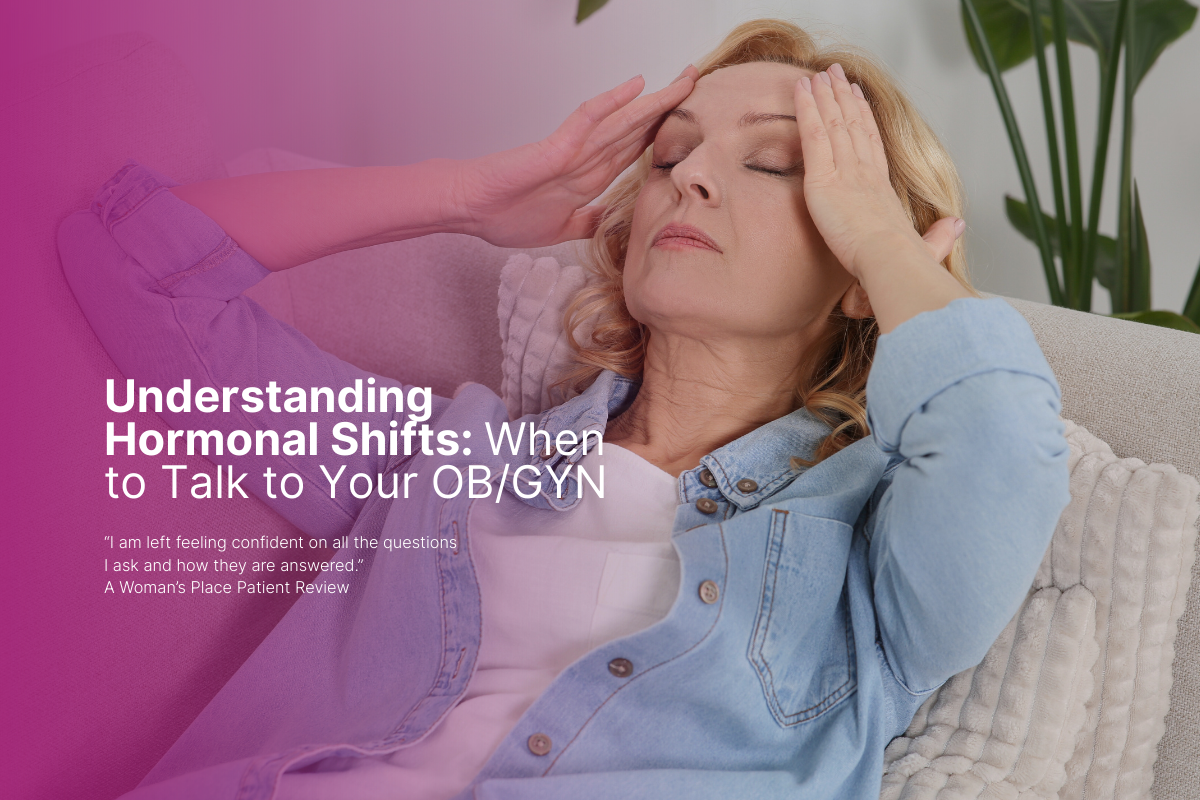
“I am left feeling confident on all the questions I ask and how they are answered.”
A Woman’s Place Patient Review
Common Life Stages with Hormonal Shifts
1. Puberty
Hormone production increases dramatically as the body transitions from childhood to reproductive maturity. This can cause:
- Irregular periods
- Acne
- Mood swings
- Weight changes
These fluctuations are usually temporary, but persistent symptoms may warrant evaluation.
2. Menstrual Cycle
Across the menstrual cycle, estrogen and progesterone levels rise and fall to prepare the body for ovulation and potential pregnancy. Many women experience:
- Cramping
- Bloating
- Breast tenderness
- Irritability or mood swings
These symptoms may be mild and expected, but if they significantly impact daily life, talking to your OB/GYN can help you find relief.
3. Pregnancy
Pregnancy triggers profound hormonal shifts that support fetal development and maternal adaptation. Common symptoms include:
- Nausea and vomiting
- Fatigue
- Breast changes
- Emotional fluctuations
Regular prenatal care helps monitor these changes and ensures maternal and fetal well-being.
4. Perimenopause & Menopause
As ovarian hormone production decreases, women may experience:
- Hot flashes
- Night sweats
- Sleep disturbances
- Irregular periods
- Vaginal dryness
- Mood changes
These symptoms vary in intensity and duration; effective strategies exist to manage them.
Signs of Hormonal Imbalance
It’s normal to have occasional fluctuations in hormones. However, persistent symptoms may reflect an imbalance that deserves medical attention. Common signs include:
1. Irregular Periods
Skipping cycles, unusually heavy bleeding (menorrhagia), or very light periods can indicate hormonal irregularities, thyroid issues, or other reproductive health concerns.
2. Unexplained Weight Changes
Significant weight gain or loss without changes in diet or activity levels may be linked to hormonal imbalances involving thyroid, insulin, or reproductive hormones.
3. Severe Fatigue
While busy schedules and stress contribute to tiredness, extreme exhaustion that doesn’t improve with rest could signal thyroid dysfunction or other hormonal causes.
4. Persistent Mood Changes
Hormones influence neurotransmitters like serotonin and dopamine. Persistent anxiety, depression, irritability, or emotional volatility should prompt a conversation with your provider.
5. Skin or Hair Changes
Acne beyond typical teen years, excessive facial hair, or hair thinning can be associated with conditions like polycystic ovary syndrome (PCOS) or androgen imbalances.
6. Reproductive Concerns
Difficulty conceiving, recurrent miscarriages, or painful intercourse may be connected to hormonal issues and warrant evaluation.
When to Talk to Your OB/GYN
You should consult your OB/GYN if any of the following apply:
Your symptoms persist beyond a few menstrual cycles.
Fluctuations tied to the menstrual cycle can be normal, but cyclic symptoms that interfere with daily functioning should be evaluated.
You notice sudden or severe changes.
Abrupt shifts in weight, energy, mood, or reproductive function are worth discussing — especially if they’re unexplained.
You’re planning pregnancy or struggling to conceive.
Hormonal balance is central to fertility. Preconception evaluations and early pregnancy care help optimize outcomes for you and your baby.
You’re entering perimenopause or menopause.
These transitions can be complex, and many effective treatments exist to manage symptoms.
You have a chronic condition that could impact hormones.
Thyroid disease, diabetes, PCOS, adrenal disorders, and certain medications can all affect hormonal balance.
Your OB/GYN will begin with a detailed history and physical exam, often supplemented by targeted blood tests to assess hormone levels, thyroid function, glucose metabolism, or other relevant factors. Based on the results, personalized treatment plans may include lifestyle interventions, nutritional guidance, medications, or referrals to specialists when appropriate.
How Hormonal Health Is Evaluated
Evaluation of hormonal health may involve:
- Blood tests (e.g., estradiol, progesterone, thyroid function)
- Ultrasound imaging for reproductive organs
- Menstrual cycle tracking
- Detailed health and symptom history
Awareness of symptom patterns and routine communication with your provider allow for earlier detection and more effective intervention.
Lifestyle Support for Hormonal Balance
Alongside medical evaluation and treatment, lifestyle adjustments can support hormonal well-being:
Nutrition
A balanced diet rich in whole foods, lean proteins, healthy fats, and fiber supports hormone production and metabolic health.
Regular Exercise
Physical activity modulates stress hormones and improves insulin sensitivity.
Stress Management
Mind-body practices like yoga, meditation, and deep breathing can help regulate cortisol and promote emotional balance.
Quality Sleep
Adequate restorative sleep influences appetite hormones and stress responses.
“Dr. Shephard has incredible bedside manner, does not rush, gives you his full attention and makes you feel like all your questions matter and are valid. I so appreciate his care and attentiveness.”
“ Dr. Lori is wonderful. She asks great questions and listens to her patients. My appointment was not only on time but early! Love that! “
A Woman’s Place Patient Review
Take Control of Your Hormonal Health
Hormones are a fundamental part of female health, influencing physical, emotional, and reproductive well-being. While many fluctuations are normal, persistent, severe, or disruptive symptoms deserve attention. An open dialogue with your OB/GYN, personalized evaluation, and a supportive care plan can make all the difference.
At A Woman’s Place in Naples, we partner with you to understand your unique journey, investigate concerns, and tailor care that aligns with your goals and lifestyle. If you’re experiencing hormonal changes that feel overwhelming or unfamiliar, we encourage you to schedule a consultation — your comfort, clarity, and health are our top priorities.
By: A Woman’s Place in Naples, FL
Hormones are biochemical signals released by glands throughout the body — including the thyroid, adrenal glands, pancreas, and reproductive organs. They travel through the bloodstream and help regulate key functions such as:
- Metabolism
- Sleep cycles
- Reproductive processes
- Stress response
- Mood regulation
- Appetite and weight control
In women, hormonal rhythms are influenced by the menstrual cycle and reproductive stages such as puberty, pregnancy, perimenopause, and menopause. Because hormones interact so broadly with bodily systems, even small imbalances can result in noticeable symptoms.
“I am left feeling confident on all the questions I ask and how they are answered.”
A Woman’s Place Patient Review
Common Life Stages with Hormonal Shifts
1. Puberty
Hormone production increases dramatically as the body transitions from childhood to reproductive maturity. This can cause:
- Irregular periods
- Acne
- Mood swings
- Weight changes
These fluctuations are usually temporary, but persistent symptoms may warrant evaluation.
2. Menstrual Cycle
Across the menstrual cycle, estrogen and progesterone levels rise and fall to prepare the body for ovulation and potential pregnancy. Many women experience:
- Cramping
- Bloating
- Breast tenderness
- Irritability or mood swings
These symptoms may be mild and expected, but if they significantly impact daily life, talking to your OB/GYN can help you find relief.
3. Pregnancy
Pregnancy triggers profound hormonal shifts that support fetal development and maternal adaptation. Common symptoms include:
- Nausea and vomiting
- Fatigue
- Breast changes
- Emotional fluctuations
Regular prenatal care helps monitor these changes and ensures maternal and fetal well-being.
4. Perimenopause & Menopause
As ovarian hormone production decreases, women may experience:
- Hot flashes
- Night sweats
- Sleep disturbances
- Irregular periods
- Vaginal dryness
- Mood changes
These symptoms vary in intensity and duration; effective strategies exist to manage them.
Signs of Hormonal Imbalance
It’s normal to have occasional fluctuations in hormones. However, persistent symptoms may reflect an imbalance that deserves medical attention. Common signs include:
1. Irregular Periods
Skipping cycles, unusually heavy bleeding (menorrhagia), or very light periods can indicate hormonal irregularities, thyroid issues, or other reproductive health concerns.
2. Unexplained Weight Changes
Significant weight gain or loss without changes in diet or activity levels may be linked to hormonal imbalances involving thyroid, insulin, or reproductive hormones.
3. Severe Fatigue
While busy schedules and stress contribute to tiredness, extreme exhaustion that doesn’t improve with rest could signal thyroid dysfunction or other hormonal causes.
4. Persistent Mood Changes
Hormones influence neurotransmitters like serotonin and dopamine. Persistent anxiety, depression, irritability, or emotional volatility should prompt a conversation with your provider.
5. Skin or Hair Changes
Acne beyond typical teen years, excessive facial hair, or hair thinning can be associated with conditions like polycystic ovary syndrome (PCOS) or androgen imbalances.
6. Reproductive Concerns
Difficulty conceiving, recurrent miscarriages, or painful intercourse may be connected to hormonal issues and warrant evaluation.
When to Talk to Your OB/GYN
You should consult your OB/GYN if any of the following apply:
Your symptoms persist beyond a few menstrual cycles.
Fluctuations tied to the menstrual cycle can be normal, but cyclic symptoms that interfere with daily functioning should be evaluated.
You notice sudden or severe changes.
Abrupt shifts in weight, energy, mood, or reproductive function are worth discussing — especially if they’re unexplained.
You’re planning pregnancy or struggling to conceive.
Hormonal balance is central to fertility. Preconception evaluations and early pregnancy care help optimize outcomes for you and your baby.
You’re entering perimenopause or menopause.
These transitions can be complex, and many effective treatments exist to manage symptoms.
You have a chronic condition that could impact hormones.
Thyroid disease, diabetes, PCOS, adrenal disorders, and certain medications can all affect hormonal balance.
Your OB/GYN will begin with a detailed history and physical exam, often supplemented by targeted blood tests to assess hormone levels, thyroid function, glucose metabolism, or other relevant factors. Based on the results, personalized treatment plans may include lifestyle interventions, nutritional guidance, medications, or referrals to specialists when appropriate.
How Hormonal Health Is Evaluated
Evaluation of hormonal health may involve:
- Blood tests (e.g., estradiol, progesterone, thyroid function)
- Ultrasound imaging for reproductive organs
- Menstrual cycle tracking
- Detailed health and symptom history
Awareness of symptom patterns and routine communication with your provider allow for earlier detection and more effective intervention.
Lifestyle Support for Hormonal Balance
Alongside medical evaluation and treatment, lifestyle adjustments can support hormonal well-being:
Nutrition
A balanced diet rich in whole foods, lean proteins, healthy fats, and fiber supports hormone production and metabolic health.
Regular Exercise
Physical activity modulates stress hormones and improves insulin sensitivity.
Stress Management
Mind-body practices like yoga, meditation, and deep breathing can help regulate cortisol and promote emotional balance.
Quality Sleep
Adequate restorative sleep influences appetite hormones and stress responses.
“Dr. Shephard has incredible bedside manner, does not rush, gives you his full attention and makes you feel like all your questions matter and are valid. I so appreciate his care and attentiveness.”
“ Dr. Lori is wonderful. She asks great questions and listens to her patients. My appointment was not only on time but early! Love that! “
A Woman’s Place Patient Review
Take Control of Your Hormonal Health
Hormones are a fundamental part of female health, influencing physical, emotional, and reproductive well-being. While many fluctuations are normal, persistent, severe, or disruptive symptoms deserve attention. An open dialogue with your OB/GYN, personalized evaluation, and a supportive care plan can make all the difference.
At A Woman’s Place in Naples, we partner with you to understand your unique journey, investigate concerns, and tailor care that aligns with your goals and lifestyle. If you’re experiencing hormonal changes that feel overwhelming or unfamiliar, we encourage you to schedule a consultation — your comfort, clarity, and health are our top priorities.